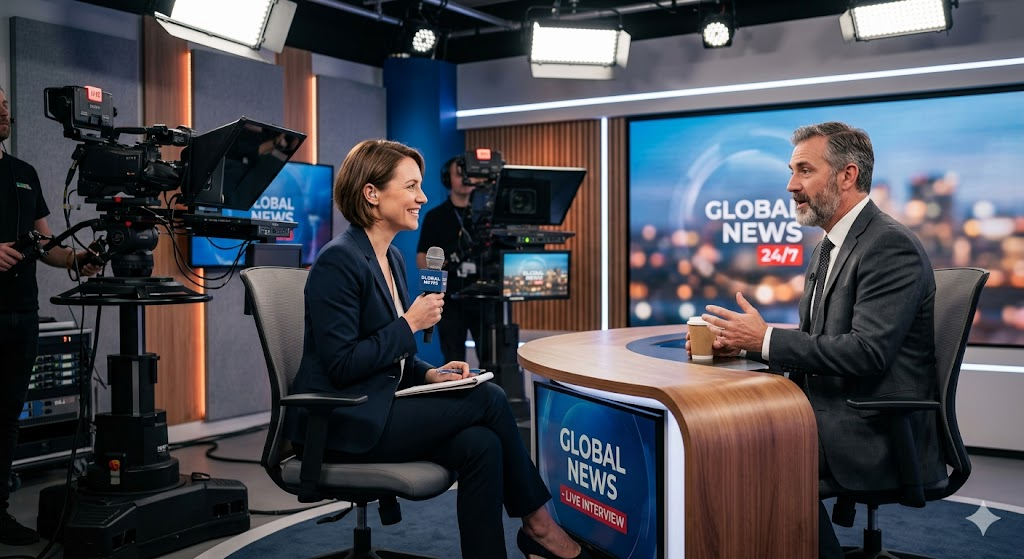
Great journalism always begins with a great conversation. Behind every powerful feature article, viral podcast episode, and groundbreaking news report is a professional who knows exactly how to ask the right questions, listen deeply, and uncover the truth.
However, interviewing is not simply about reading a list of questions off a notepad. It is a highly strategic craft. It involves building rapid trust, reading subtle emotions, and guiding an interaction so that the subject feels comfortable enough to share their genuine experiences. When done correctly, an interview feels less like an interrogation and more like two people speaking their absolute truth to one another.
The world’s top conversationalists use proven methods to get honest and meaningful answers. Learning these specific journalism interview techniques can dramatically improve your communication skills and storytelling ability. By applying these strategies, you can transform surface-level chats into rich, compelling narratives.
Why Professional Interviewing Skills Matter
Interviews are the foundation that shape stories. For content writers, podcasters, and reporters, the quality of your source material dictates the quality of your final product. A poorly conducted interview leads to weak quotes, boring articles, and disengaged readers.
Conversely, a masterful interview reveals hidden truths. It builds emotional connections that resonate with audiences and creates impactful content that stands out in a crowded digital landscape. Strong interviewing skills give you a competitive edge, allowing you to extract unique insights that no other writer has uncovered.
10 Interview Techniques Used by Top Journalists
1. Do Deep, Meticulous Research Beforehand
Preparation is the foundation of any successful conversation. The best interviewers spend hours researching their subjects before they ever press record. They study background information, listen to previous interviews, review achievements, and understand past controversies.
National Public Radio’s Terry Gross, host of Fresh Air, is famous for her intense preparation. She plows through an author’s book, dog-ears pages, and takes meticulous notes on everything she wants to remember. She then uses those notes as a memory bank to inspire her questions. Professor Peter Laufer, the James Wallace Chair of Journalism at the University of Oregon, echoes this sentiment. He notes that asking an author to simply “tell me about the book” is a wasted opportunity. When you do the background research yourself, you can start the conversation at a much higher level.
2. Let the First Question Set the Tone
The opening moments of an interview dictate the energy for the entire exchange. Top journalists know that the first question sets the tone and establishes their credibility.
Instead of starting with boring biographical questions, skilled interviewers often jump right into compelling territory. For example, legendary broadcaster Larry King would sometimes ask complex figures like Osama bin Laden about leaving his wealthy family, immediately diving into personal motivations rather than standard talking points. By asking a thoughtful, well-researched first question, you signal to your subject that this will be a substantive and engaging conversation.
3. Ditch the List and Build Rapid Rapport
While preparation is vital, relying entirely on a rigid script will ruin the flow of a conversation. Peter Laufer urges journalists to engage the interviewee as much as possible and develop a relationship fast. Coming into an interview and rigidly asking, “What is your name? Why are you wearing those clothes?” creates a sterile environment.
Instead, look around the subject’s environment for clues that can spark a connection. Laufer points out that noticing something unique—like a plush toy unicorn sitting on a professional’s bookshelf—can serve as a brilliant icebreaker. Building trust quickly encourages the subject to step out of the formal structure and share more vulnerable, authentic emotions.
4. Ask Open-Ended and Neutral Questions
Top journalists avoid yes-or-no questions. Instead, they frame inquiries that encourage detailed, expansive answers. Furthermore, they are careful to use neutral language.
Journalism educator Betty Ming Liu advises against using emotional words that can negatively influence the interview. If you ask someone if they are happy about an award, they will likely just reply, “Yes, I am happy.” Instead, ask a neutral question like, “How do you feel about winning this award?” This approach removes your personal bias and gives the subject the necessary space to answer with genuine feeling and in their own words.
5. Explore the Gap Between Expectation and Reality
One of the most effective ways to generate a compelling narrative is to focus on the space between what a person thought would happen and what actually occurred.
Ira Glass, the host of This American Life, frequently asks his subjects, “How did you think the situation was going to work out before it happened? And then how did it really work out?” Similarly, Brandon Stanton, the creator of Humans of New York, often asks people how their lives have turned out differently than they expected. This technique forces the subject to reflect on their personal growth, mistakes, and life lessons, yielding incredibly rich storytelling material.
6. Practice Active Listening and Mirroring
Listening is arguably more important than speaking. Top journalists pay full attention to tone, pauses, and body language. They do not just wait for their turn to speak; they actively process the information being shared.
Terry Gross emphasizes that when someone tells you something heartfelt or personal, you cannot simply move on to the next question as if nothing happened. You must acknowledge that the person has given you a gift. Another powerful listening technique is “mirroring,” heavily utilized by podcast host Joe Rogan and former FBI hostage negotiator Chris Voss. By simply repeating the last few words of a guest’s response as a question, you naturally prompt them to elaborate and gather more critical intelligence.
7. Strategically Make Assumptions
While traditional journalism schools often warn against making assumptions, advanced interviewers sometimes use them deliberately to provoke a raw response.
Broadcaster Howard Stern is known for making assumptions about his guests’ careers and personal lives. By presenting an assumption, the interviewer forces the subject to either fiercely agree and expand upon the point, or passionately correct the record. Oprah Winfrey used a similar tactic when she asked Prince Harry how he, a literal prince, could possibly feel “trapped.” This gentle provocation can break through rehearsed PR answers and reveal the actual juice of the story.
8. Master the Art of the Follow-Up
The best answers rarely come from the initial question. They surface during the follow-up. When a subject gives a confusing or surface-level answer, you must be willing to dig deeper.
Michael Barbaro, host of The New York Times podcast The Daily, frequently relies on the simplest follow-up of all: “Why?” He also regularly pauses his guests to ask, “What does that mean in the moment?” If an answer is too long or confusing, you can gently intervene. Gross sometimes steps in to say, “Forgive me, my question must have been confusing so let me restate,” which allows her to steer the subject back on track without insulting them.
9. Make a Statement Instead of Asking a Question
Sometimes, constant questioning can make a subject feel like they are undergoing an intense interrogation. To alleviate this pressure, Betty Ming Liu recommends occasionally stopping the questions altogether and making a statement instead.
If a subject is recounting a difficult ordeal, try saying, “I cannot imagine going through that,” or “I was wondering how you managed to escape that situation.” By framing your thought without a question mark, you show respect and empathy. It empowers the interviewee, allowing them to answer in whatever way they choose. This builds a tremendous amount of trust and often leads them to open up far more than they initially intended.
10. End With a Strong Closing Opportunity
The final moments of an interview are just as critical as the first. Always end by giving the subject control over the final word.
A standard but highly effective closing technique is simply asking, “Is there anything else you want to share?” or “Is there a question I should have asked you, but didn’t?” This gives the interviewee a chance to highlight points that are deeply important to them, which you might have missed during your research. Additionally, remember that all human beings seek validation. Oprah Winfrey notes that even the most powerful people in the world—from presidents to global pop stars—will often finish an interview and immediately ask, “Was that okay?” Treat your subjects with humanity and respect from the very first question to the final sign-off.
Skills Every Content Writer Should Develop
To truly master the craft of interviewing, content writers and journalists must continually refine a specific set of soft skills. These abilities take time to develop but pay massive dividends in your writing career.
First, focus on your emotional intelligence. You need to read the room and adjust your tone based on the emotional state of your subject. If they are tense, you must become a calming presence. If they are excited, you can afford to match their energy.
Second, practice your critical thinking. When a subject shares a statistic or an anecdote, you must process it in real time. Does this align with your prior research? Does it contradict something they said five minutes ago? Your ability to critically evaluate their words on the fly will dictate the quality of your follow-up questions.
Finally, cultivate extreme patience. Some subjects take a long time to warm up. They might speak in circles before finally arriving at a brilliant insight. If you rush them or aggressively interrupt, you will miss the golden quotes that make your final piece shine.
Frequently Asked Questions About Interviewing
What are the most effective interview techniques for beginner journalists?
Beginners should focus heavily on thorough research, writing open-ended questions, and practicing active listening. Avoid yes-or-no questions, and always ask for clarification if you do not completely understand a subject’s answer.
How can I make a nervous interviewee feel more comfortable?
Start by setting clear boundaries. Tell them what the interview is about, how long it will take, and what you plan to do with the information. Terry Gross often tells her guests to let her know if a question is too personal, giving them the explicit permission to push back. This simple reassurance greatly reduces anxiety.
Is it better to conduct interviews in person or over the phone?
Both formats have distinct advantages. In-person interviews allow you to read body language, maintain eye contact, and build physical rapport. Remote or phone interviews remove visual distractions, allowing the interviewer to take meticulous notes and reference research materials without breaking the conversational flow.
How many questions should I prepare for a standard interview?
While it depends on the length of the session, having 10 to 15 well-researched questions for an hour-long interview is a safe baseline. However, you should not expect to get through all of them. A good conversation will naturally veer off script as you ask necessary follow-up questions.
Your Next Steps for Better Conversations
Mastering the top journalist interview techniques is not something that happens overnight. The legendary interviewer Larry King conducted over 60,000 interviews during his career, while Oprah Winfrey has completed over 37,000. Their mastery came from endless repetition, curiosity, and a genuine desire to understand the people sitting across from them.
You can start improving your skills immediately. The next time you sit down to interview a source for an article or a guest for a podcast, spend an extra hour on your background research. Focus on asking open-ended questions, and challenge yourself to listen so intently that your follow-up questions write themselves. By treating the interview as a collaborative conversation rather than a rigid transaction, you will uncover the powerful stories that your audience is waiting to read.