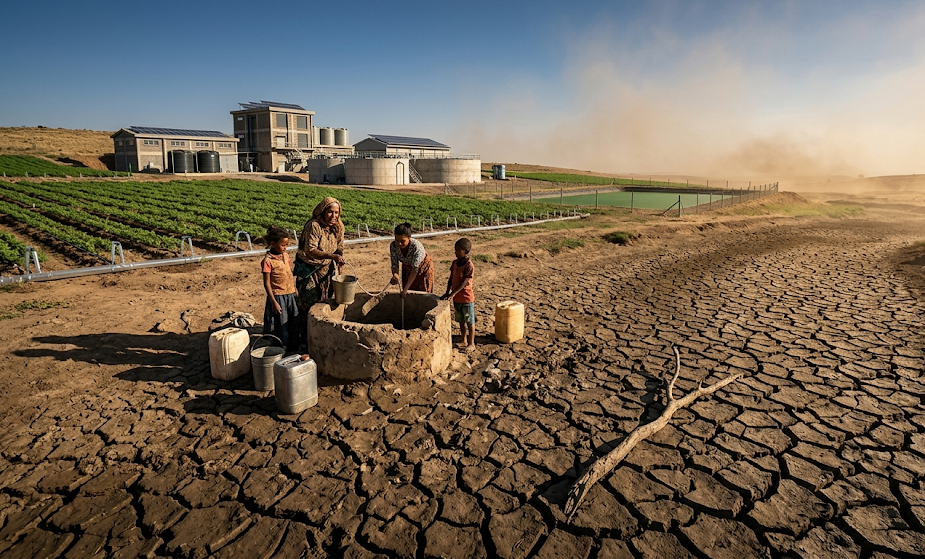
Water is the foundation of life. Every living organism depends on it for survival, and every society relies on it for agriculture, industry, sanitation, and economic development. Despite covering more than 70% of the Earth’s surface, accessible freshwater resources are surprisingly limited. As populations grow, climate patterns shift, and water demand increases, the world is facing an unprecedented water crisis.
The global water crisis is one of the most pressing environmental and humanitarian challenges of the 21st century. Millions of people around the world lack access to clean drinking water, while billions experience water scarcity for at least part of the year. Without urgent action, water shortages could threaten food security, economic stability, public health, and environmental sustainability.
Understanding the causes of the water crisis and exploring practical solutions is essential for creating a sustainable future. Governments, businesses, communities, and individuals all have a role to play in protecting and managing one of the planet’s most valuable resources.
Understanding the Global Water Crisis
The global water crisis refers to the growing gap between freshwater demand and available supply. While water exists in abundance on Earth, only about 2.5% is freshwater, and much of that is trapped in glaciers, ice caps, or deep underground.
As a result, less than 1% of the world’s water is readily available for human use. This limited supply must meet the needs of households, agriculture, industries, and ecosystems.
Water scarcity occurs when water demand exceeds available resources or when poor water quality restricts its use. The crisis is not only about quantity but also about accessibility, affordability, and safety.
Why Water Matters
Water supports every aspect of human life and economic activity.
It is essential for:
- Drinking and cooking
- Agriculture and food production
- Industrial manufacturing
- Energy generation
- Public health and sanitation
- Environmental sustainability
Without reliable access to clean water, communities struggle to maintain health, productivity, and economic growth.
Current State of Global Water Resources
The world is experiencing increasing pressure on freshwater supplies.
Several regions already face severe water stress, including parts of:
- Africa
- South Asia
- The Middle East
- Australia
- Latin America
- Western United States
Rapid urbanization and population growth continue to increase demand for water, while climate change is disrupting natural water cycles.
Many experts warn that water scarcity may become one of the defining global challenges of the coming decades.
Major Causes of the Global Water Crisis
Population Growth
The global population continues to expand, increasing demand for freshwater resources.
More people require:
- Drinking water
- Food production
- Housing
- Sanitation services
As urban populations grow, cities face mounting pressure on water infrastructure and supply systems.
Climate Change
Climate change is significantly affecting global water availability.
Rising temperatures contribute to:
- Increased evaporation
- More frequent droughts
- Altered rainfall patterns
- Reduced snowpack
- Glacier melting
These changes disrupt water supplies and create uncertainty for communities dependent on predictable water sources.
Water Pollution
Pollution is one of the leading causes of freshwater degradation.
Common sources include:
- Industrial waste
- Agricultural runoff
- Plastic pollution
- Sewage discharge
- Chemical contamination
Polluted water becomes unsafe for drinking, agriculture, and ecosystem health.
In many developing regions, inadequate wastewater treatment worsens contamination problems.
Overuse of Groundwater
Groundwater provides a significant portion of the world’s freshwater supply.
However, excessive pumping has led to declining aquifers in many countries.
Overextraction can cause:
- Falling water tables
- Land subsidence
- Reduced river flows
- Saltwater intrusion
Restoring depleted groundwater reserves can take decades or even centuries.
Agricultural Demand
Agriculture accounts for approximately 70% of global freshwater use.
Inefficient irrigation systems often waste substantial amounts of water.
Growing food demand places additional pressure on already stressed water resources.
Poor Water Management
In many regions, outdated infrastructure and ineffective governance contribute to water shortages.
Common issues include:
- Leaking pipelines
- Inadequate storage facilities
- Lack of investment
- Poor regulation
- Inefficient distribution systems
Improving water management practices is critical for addressing the crisis.
Impact of the Water Crisis on Human Health
Access to clean water is directly linked to public health.
Contaminated water can spread diseases such as:
- Cholera
- Typhoid
- Dysentery
- Hepatitis A
Millions of people worldwide suffer from waterborne illnesses every year.
Children are particularly vulnerable, and unsafe water remains a major cause of preventable deaths in many developing countries.
Water scarcity also affects hygiene and sanitation, increasing the risk of disease outbreaks.
Impact on Agriculture and Food Security
Agriculture depends heavily on water availability.
When water supplies decline, farmers face challenges such as:
- Reduced crop yields
- Soil degradation
- Livestock losses
- Rising production costs
Food shortages and higher prices can result from prolonged droughts and water scarcity.
As global populations increase, ensuring sufficient water for agriculture will become increasingly important.
Economic Consequences of Water Scarcity
Water shortages can significantly impact economic development.
Industries such as:
- Manufacturing
- Energy production
- Mining
- Tourism
all rely on reliable water supplies.
Water scarcity can disrupt operations, reduce productivity, and increase costs.
Businesses may face financial losses when water becomes unavailable or expensive.
Countries with severe water challenges often experience slower economic growth and increased social instability.
Environmental Impact of Water Shortages
Healthy ecosystems depend on adequate water supplies.
Rivers, lakes, wetlands, and forests support biodiversity and ecological balance.
Water scarcity can lead to:
- Habitat destruction
- Species extinction
- Wetland loss
- Desertification
- Reduced ecosystem services
Environmental degradation further weakens natural systems that help regulate water cycles.
Regions Most Affected by Water Scarcity
Africa
Many African countries face chronic water shortages due to climate variability, population growth, and limited infrastructure.
Rural communities often travel long distances to access safe drinking water.
South Asia
Countries such as India, Pakistan, and Bangladesh face increasing water stress.
Rapid urbanization, groundwater depletion, and climate change contribute to growing challenges.
Middle East
The Middle East is one of the world’s most water-scarce regions.
Limited rainfall and high temperatures make water management a critical issue.
Many countries rely heavily on desalination and imported water resources.
Latin America
Although rich in freshwater resources, unequal distribution and pollution create water access challenges in several regions.
Developed Nations
Even developed countries are not immune.
Droughts in California, Australia, and parts of Europe have demonstrated the vulnerability of advanced economies to water shortages.
The Connection Between Water and Climate Change
Climate change and water scarcity are closely interconnected.
Warmer temperatures affect the water cycle by increasing evaporation and altering precipitation patterns.
Extreme weather events such as floods and droughts are becoming more frequent and severe.
These changes affect:
- Water availability
- Agricultural productivity
- Infrastructure resilience
- Public health
Addressing climate change is therefore essential for long-term water security.
Innovative Solutions to the Water Crisis
Water Conservation
Conservation remains one of the most effective strategies for reducing water demand.
Simple measures include:
- Fixing leaks
- Using water-efficient appliances
- Reducing unnecessary consumption
- Improving irrigation efficiency
Small actions collectively can have a significant impact.
Smart Water Management
Digital technologies are transforming water management.
Smart systems can monitor:
- Water usage
- Leak detection
- Infrastructure performance
- Water quality
Real-time data helps utilities improve efficiency and reduce waste.
Wastewater Recycling
Recycling treated wastewater provides an additional water source for:
- Agriculture
- Industry
- Landscaping
- Groundwater recharge
Many cities are investing in advanced treatment technologies to expand water reuse programs.
Rainwater Harvesting
Collecting and storing rainwater can reduce dependence on traditional water supplies.
Rainwater harvesting systems are increasingly used in homes, schools, and businesses.
Benefits include:
- Reduced water bills
- Improved drought resilience
- Lower demand on municipal systems
Desalination Technology
Desalination converts seawater into freshwater.
Advancements in technology have made desalination more efficient and affordable.
Countries facing severe water shortages increasingly rely on desalination plants.
However, energy consumption and environmental impacts remain challenges.
Sustainable Agriculture
Modern farming practices can significantly reduce water consumption.
Examples include:
- Drip irrigation
- Precision agriculture
- Drought-resistant crops
- Soil moisture monitoring
These techniques improve efficiency while maintaining productivity.
The Role of Technology in Water Management
Technology is becoming a powerful tool in addressing water scarcity.
Emerging innovations include:
Artificial Intelligence
AI helps predict water demand, optimize distribution systems, and identify infrastructure issues before they become major problems.
Internet of Things (IoT)
Connected sensors provide real-time information about water quality, pressure, and consumption.
Utilities can respond quickly to leaks and operational challenges.
Satellite Monitoring
Satellites help track water resources, drought conditions, and environmental changes.
This information supports better planning and resource management.
Advanced Filtration Systems
Modern filtration technologies can remove contaminants more effectively than traditional methods.
These systems improve access to safe drinking water in both urban and rural areas.
Government Policies and Global Cooperation
Water challenges often cross national boundaries.
International cooperation is essential for managing shared rivers, lakes, and groundwater resources.
Governments can support water security through:
- Infrastructure investment
- Water conservation programs
- Environmental protection laws
- Public education campaigns
- Climate adaptation strategies
Strong governance is a key component of sustainable water management.
Community-Based Water Solutions
Local communities play a vital role in addressing water challenges.
Successful community initiatives often include:
- Water conservation education
- Rainwater harvesting projects
- Watershed restoration
- Local infrastructure maintenance
Community participation increases awareness and encourages responsible water use.
Corporate Responsibility in Water Conservation
Businesses are increasingly recognizing water as a critical sustainability issue.
Many companies are implementing strategies such as:
- Water-efficient manufacturing
- Recycling systems
- Sustainable sourcing
- Supply chain monitoring
Corporate leadership can drive significant improvements in water stewardship.
Individual Actions That Make a Difference
Every person can contribute to water conservation.
Practical steps include:
- Turning off taps when not in use
- Repairing household leaks
- Using water-efficient fixtures
- Collecting rainwater
- Reducing food waste
- Supporting sustainable products
Individual actions may seem small, but collectively they can create meaningful change.
Future Outlook for Global Water Security
The future of water security will depend on the decisions made today.
Several trends are likely to shape the coming decades:
- Continued population growth
- Increased urbanization
- Climate adaptation efforts
- Technological innovation
- Greater focus on sustainability
Countries that invest in resilient water systems will be better prepared to meet future challenges.
Innovation, policy reform, and international collaboration will be essential components of long-term solutions.
Conclusion
The global water crisis is one of the most urgent challenges facing humanity. Growing populations, climate change, pollution, and inefficient water management are placing unprecedented pressure on freshwater resources worldwide. The consequences affect public health, agriculture, economies, and ecosystems.
Despite these challenges, numerous solutions are available. Water conservation, advanced technologies, sustainable agriculture, wastewater recycling, desalination, and effective governance can help secure water resources for future generations. Success will require cooperation among governments, businesses, communities, and individuals.
Water is not an unlimited resource. Protecting and managing it responsibly is essential for ensuring a sustainable, healthy, and prosperous future. By embracing innovative solutions and adopting responsible practices, the world can overcome water challenges and build a more water-secure future for all.