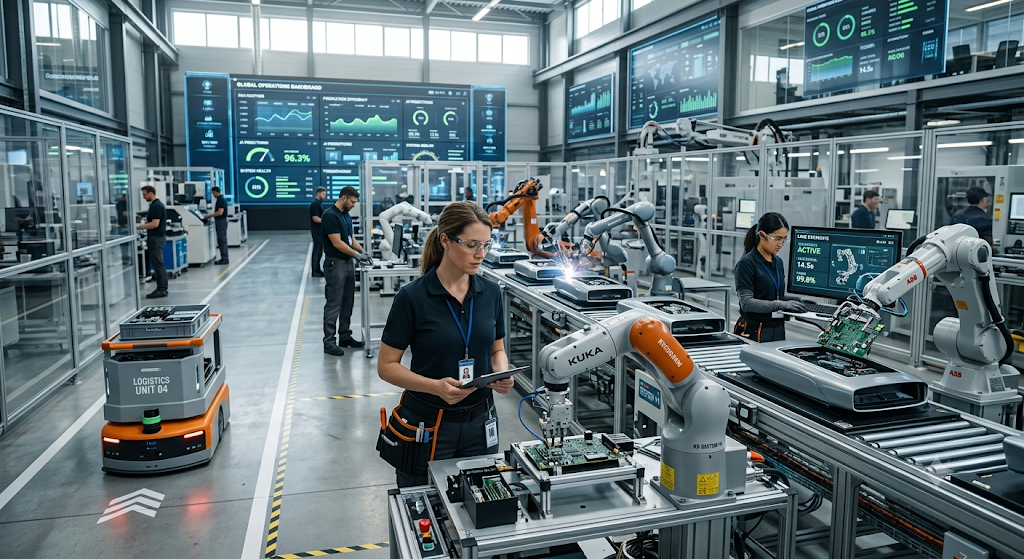
Autonomous systems and robotics are no longer concepts limited to science fiction movies or advanced research laboratories. They have become an essential part of modern life, influencing industries, economies, and everyday experiences. From self-driving vehicles and intelligent manufacturing robots to autonomous drones and robotic healthcare assistants, these technologies are revolutionizing the way people live and work.
The rapid advancement of artificial intelligence (AI), machine learning, computer vision, sensor technologies, and cloud computing has accelerated the development of autonomous systems. Businesses worldwide are investing heavily in robotics to improve productivity, reduce operational costs, enhance safety, and address labor shortages. As technology continues to evolve, autonomous systems are expected to play an even larger role in shaping the future.
Understanding Autonomous Systems and Robotics
Autonomous systems are machines or software-driven technologies capable of performing tasks with minimal or no human intervention. These systems use sensors, algorithms, and artificial intelligence to perceive their environment, make decisions, and execute actions.
Robotics refers to the design, development, and operation of robots that can perform various physical tasks. When combined with autonomous capabilities, robots can independently navigate environments, analyze situations, and complete complex operations.
Examples of autonomous systems include:
- Self-driving cars
- Autonomous drones
- Industrial robots
- Warehouse automation systems
- Agricultural robots
- Autonomous ships
- Service robots
- Healthcare robots
These systems rely on advanced technologies such as machine learning, computer vision, natural language processing, edge computing, and the Internet of Things (IoT).
The Evolution of Robotics
The robotics industry has undergone remarkable transformation over the past several decades.
Early Industrial Robots
The first industrial robots emerged during the 1960s and were primarily used in automotive manufacturing. These robots performed repetitive tasks such as welding, painting, and assembly.
Although effective, early robots were highly limited. They operated in controlled environments and required extensive programming.
The Rise of Intelligent Robotics
Advances in computing power and artificial intelligence enabled robots to become more adaptable. Instead of following fixed instructions, modern robots can analyze data, learn from experiences, and adjust their behavior.
This shift allowed robotics to expand beyond factories into industries such as healthcare, logistics, agriculture, retail, and transportation.
Autonomous Systems Era
Today’s autonomous systems integrate AI, sensors, cloud platforms, and real-time analytics. These technologies allow machines to operate independently, navigate complex environments, and make decisions without constant human supervision.
As AI capabilities continue improving, autonomous systems are becoming smarter, faster, and more reliable.
Key Technologies Driving Autonomous Systems
Several technological advancements have fueled the rapid growth of autonomous systems and robotics.
Artificial Intelligence
AI serves as the brain behind autonomous machines. It enables systems to analyze large amounts of data, recognize patterns, and make intelligent decisions.
Machine learning algorithms help robots improve performance over time by learning from experience rather than relying solely on pre-programmed instructions.
Computer Vision
Computer vision allows machines to interpret visual information from cameras and sensors.
Applications include:
- Object detection
- Facial recognition
- Traffic monitoring
- Quality inspection
- Navigation systems
Computer vision enables robots to understand and interact with their surroundings more effectively.
Internet of Things (IoT)
IoT connects devices, sensors, and systems through the internet.
Autonomous robots can collect real-time information from connected devices, improving decision-making and operational efficiency.
Edge Computing
Edge computing processes data closer to the source rather than relying entirely on cloud servers.
This reduces latency and enables faster decision-making for autonomous systems operating in real-time environments.
Advanced Sensors
Modern robots utilize sophisticated sensors including:
- LiDAR
- Radar
- Ultrasonic sensors
- Infrared sensors
- GPS systems
These technologies help robots perceive their environment accurately and safely.
Cloud Computing
Cloud platforms provide massive computing resources and data storage capabilities.
Robots can access cloud-based intelligence, allowing continuous updates, learning, and coordination across multiple systems.
Applications of Autonomous Systems and Robotics
Autonomous technologies are transforming nearly every major industry.
Manufacturing and Industrial Automation
Manufacturing remains one of the largest adopters of robotics.
Industrial robots perform tasks such as:
- Assembly
- Welding
- Packaging
- Material handling
- Inspection
Benefits include:
- Increased productivity
- Reduced defects
- Improved workplace safety
- Lower operating costs
Smart factories increasingly rely on autonomous robots working alongside human employees.
Transportation and Autonomous Vehicles
Self-driving technology represents one of the most visible applications of autonomous systems.
Autonomous vehicles use AI, sensors, and mapping technologies to navigate roads with minimal human intervention.
Potential benefits include:
- Reduced traffic accidents
- Improved mobility
- Lower transportation costs
- Greater fuel efficiency
Autonomous trucking and delivery vehicles are also gaining momentum.
Logistics and Warehousing
E-commerce growth has accelerated demand for warehouse automation.
Autonomous mobile robots help:
- Sort packages
- Move inventory
- Pick products
- Manage stock levels
Automated warehouses can process orders faster and more accurately than traditional facilities.
Healthcare and Medical Robotics
Healthcare is experiencing significant transformation through robotics.
Medical robots assist with:
- Surgical procedures
- Patient monitoring
- Rehabilitation therapy
- Medication delivery
- Hospital logistics
Robotic-assisted surgery allows doctors to perform highly precise procedures while reducing recovery times for patients.
Agriculture and Farming
Agricultural robotics addresses labor shortages and improves productivity.
Examples include:
- Autonomous tractors
- Crop-monitoring drones
- Robotic harvesters
- Precision spraying systems
Farmers can increase yields while reducing waste and environmental impact.
Retail and Customer Service
Retail businesses are using autonomous technologies to enhance customer experiences.
Applications include:
- Inventory management robots
- Automated checkout systems
- Customer assistance robots
- Delivery robots
These solutions help businesses improve efficiency and reduce operational expenses.
Defense and Security
Military organizations increasingly utilize autonomous systems for surveillance, reconnaissance, logistics, and threat detection.
Security robots can monitor facilities, identify suspicious activities, and provide real-time alerts.
While these technologies improve safety, they also raise ethical and regulatory concerns.
Construction Industry
Construction companies are adopting robotics to improve project efficiency and safety.
Robotic applications include:
- Bricklaying
- Concrete printing
- Site inspection
- Surveying
- Demolition operations
Autonomous construction equipment can operate in hazardous environments while reducing risks for workers.
Benefits of Autonomous Systems and Robotics
The rise of autonomous technologies offers numerous advantages across industries.
Increased Productivity
Robots can work continuously without fatigue, significantly increasing output and operational efficiency.
Businesses can complete tasks faster while maintaining consistent quality.
Enhanced Accuracy
Autonomous systems perform repetitive tasks with exceptional precision.
This reduces errors and improves product quality across manufacturing and service industries.
Improved Workplace Safety
Robots can handle dangerous tasks that expose workers to risks.
Examples include:
- Hazardous material handling
- Mining operations
- High-temperature manufacturing
- Disaster response
Reducing human exposure to dangerous environments enhances workplace safety.
Cost Savings
Although initial implementation costs can be significant, autonomous systems often deliver long-term savings through:
- Lower labor costs
- Reduced errors
- Increased efficiency
- Less downtime
Many organizations achieve substantial returns on investment over time.
Addressing Labor Shortages
Many industries face workforce shortages due to aging populations and changing labor market dynamics.
Autonomous systems help fill critical gaps while supporting economic growth.
Better Decision-Making
AI-powered systems analyze large volumes of data quickly, providing valuable insights for businesses and organizations.
Data-driven decisions often lead to improved outcomes and greater operational efficiency.
Challenges Facing Autonomous Systems
Despite significant progress, autonomous technologies face several challenges.
High Implementation Costs
Developing and deploying advanced robotic systems can require substantial investments.
Smaller businesses may struggle to adopt these technologies due to budget constraints.
Ethical Concerns
The increasing autonomy of machines raises important ethical questions.
Key concerns include:
- Accountability for mistakes
- Decision-making transparency
- Bias in AI systems
- Privacy issues
Governments and organizations continue working to establish ethical frameworks.
Cybersecurity Risks
Connected autonomous systems can become targets for cyberattacks.
A compromised robot or autonomous vehicle could create significant safety and security risks.
Strong cybersecurity measures are essential for protecting critical systems.
Workforce Displacement
Automation may replace certain jobs, particularly those involving repetitive tasks.
While new opportunities emerge in technology-related fields, workforce transitions require reskilling and education programs.
Regulatory Challenges
Governments worldwide are still developing regulations for autonomous technologies.
Issues such as liability, safety standards, and certification requirements remain under discussion.
Technical Limitations
Although autonomous systems have improved significantly, they can still struggle with unexpected situations and complex environments.
Continuous research and development are necessary to enhance reliability and adaptability.
The Role of Artificial Intelligence in Robotics
Artificial intelligence serves as the foundation for next-generation robotics.
AI enables robots to:
- Learn from data
- Recognize patterns
- Adapt to changing environments
- Understand language
- Make decisions
Machine learning and deep learning algorithms allow robots to improve performance over time without extensive reprogramming.
As AI models become more advanced, robots are expected to demonstrate increasingly human-like capabilities.
Autonomous Drones and Their Growing Importance
Drones have become one of the fastest-growing segments within autonomous technology.
Industries using drones include:
- Agriculture
- Logistics
- Construction
- Emergency response
- Environmental monitoring
Autonomous drones can inspect infrastructure, deliver goods, monitor crops, and support disaster relief operations.
Future drone networks may transform transportation and delivery systems globally.
Human-Robot Collaboration
Rather than replacing humans entirely, many organizations are embracing collaborative robotics.
Collaborative robots, often called cobots, work alongside human employees.
Benefits include:
- Increased productivity
- Enhanced safety
- Greater flexibility
- Reduced physical strain
Cobots are particularly popular in manufacturing, logistics, and healthcare environments.
Human-robot collaboration represents a practical approach to maximizing the strengths of both humans and machines.
Robotics in Smart Cities
Smart cities are increasingly integrating autonomous technologies into urban infrastructure.
Applications include:
- Traffic management systems
- Autonomous public transportation
- Smart waste collection
- Infrastructure monitoring
- Public safety systems
These technologies help cities become more efficient, sustainable, and responsive to residents’ needs.
As urban populations continue growing, robotics will play an important role in addressing complex city challenges.
The Future of Autonomous Vehicles
The autonomous vehicle industry continues making significant progress.
Future developments may include:
- Fully autonomous taxis
- Driverless public transportation
- Autonomous freight networks
- Smart traffic ecosystems
Advancements in AI, connectivity, and sensor technology are accelerating the path toward widespread adoption.
However, regulatory approval, public trust, and infrastructure development remain critical factors.
Emerging Trends in Robotics
Several trends are shaping the future of autonomous systems.
AI-Powered Adaptability
Future robots will become increasingly adaptable and capable of handling unpredictable environments.
Swarm Robotics
Groups of robots working collaboratively can complete tasks more efficiently than individual machines.
Applications include logistics, agriculture, and disaster response.
Soft Robotics
Soft robots use flexible materials that mimic biological systems.
These designs improve safety and expand robotics applications in healthcare and delicate manufacturing.
Digital Twins
Digital twin technology creates virtual replicas of physical systems.
Organizations can test and optimize robotic operations before deployment.
Autonomous Service Robots
Service robots are expected to become more common in homes, hotels, restaurants, and healthcare facilities.
These robots will assist with routine tasks and improve customer experiences.
Economic Impact of Robotics
The global robotics industry is generating significant economic value.
Businesses adopting automation often experience:
- Higher productivity
- Greater competitiveness
- Faster innovation
- Increased profitability
At the same time, governments and educational institutions must invest in workforce development to prepare workers for evolving job markets.
The long-term economic benefits of robotics depend on balancing technological advancement with social responsibility.
Preparing for a Robotic Future
Organizations seeking to benefit from autonomous technologies should focus on:
Workforce Training
Employees need skills in:
- Robotics operation
- Data analysis
- AI management
- Programming
- Cybersecurity
Continuous learning will become increasingly important.
Strategic Planning
Businesses should evaluate where automation can deliver the greatest value while maintaining operational flexibility.
Ethical Governance
Responsible AI and robotics frameworks will help ensure technologies are deployed safely and fairly.
Cybersecurity Investment
Protecting autonomous systems from cyber threats must remain a top priority.
Conclusion
The rise of autonomous systems and robotics represents one of the most significant technological transformations of the modern era. Powered by advances in artificial intelligence, machine learning, sensors, cloud computing, and connectivity, autonomous technologies are reshaping industries ranging from manufacturing and healthcare to transportation and agriculture.
These innovations offer substantial benefits, including improved productivity, enhanced safety, reduced costs, and greater operational efficiency. However, challenges such as cybersecurity risks, workforce transitions, ethical concerns, and regulatory uncertainties must be addressed carefully.
As autonomous systems become increasingly intelligent and capable, their influence on society will continue to expand. Organizations that embrace innovation while prioritizing responsible implementation will be best positioned to thrive in the rapidly evolving robotic future. The coming decade is likely to witness unprecedented growth in autonomous technologies, fundamentally changing how businesses operate, how cities function, and how people interact with the world around them.