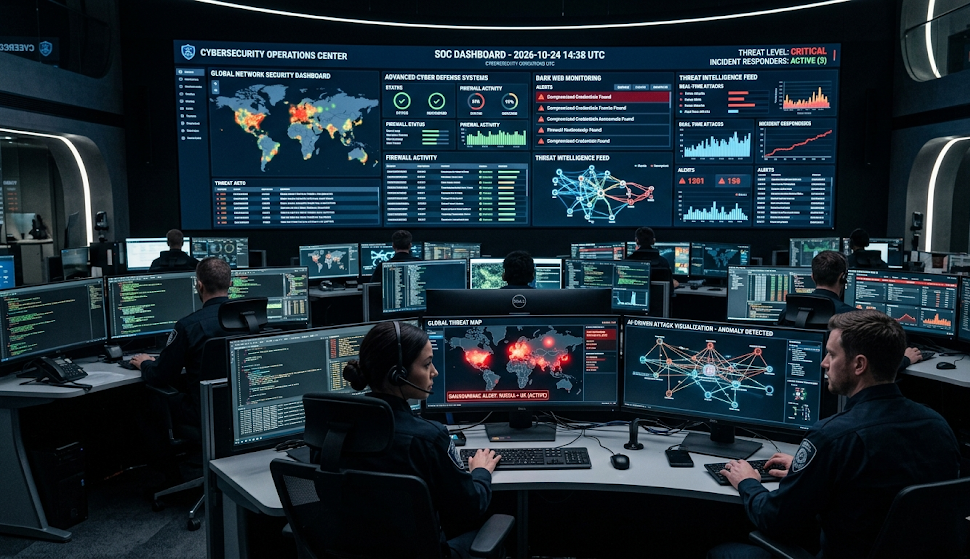
As the world becomes increasingly connected through digital technologies, cybersecurity has evolved into one of the most critical concerns facing governments, businesses, and individuals. The rapid expansion of cloud computing, artificial intelligence, Internet of Things (IoT) devices, remote work environments, digital payments, and smart infrastructure has created unprecedented opportunities for innovation and economic growth. However, these advancements have also expanded the attack surface available to cybercriminals, nation-state actors, and malicious organizations.
In 2026, cybersecurity is no longer simply an IT issue. It has become a matter of national security, economic stability, corporate survival, and personal privacy. Organizations across every sector face increasingly sophisticated cyber threats capable of disrupting operations, stealing sensitive information, damaging reputations, and causing significant financial losses.
The cybersecurity landscape is evolving at a remarkable pace. Attackers are leveraging artificial intelligence, automation, ransomware-as-a-service platforms, and advanced social engineering techniques to exploit vulnerabilities. At the same time, defenders must protect increasingly complex digital ecosystems while adapting to changing regulatory requirements and emerging technologies.
The Evolving Cyber Threat Landscape
Cybersecurity threats have become more sophisticated, organized, and financially motivated than ever before.
In previous decades, many cyberattacks were carried out by individual hackers seeking recognition or technical challenges. Today, cybercrime has become a global industry involving highly organized criminal groups, state-sponsored actors, and professional hacking networks.
Several factors contribute to the evolving threat landscape:
- Increased digital transformation
- Growing cloud adoption
- Expansion of connected devices
- Advanced artificial intelligence tools
- Remote and hybrid work environments
- Global geopolitical tensions
These developments have created new opportunities for cybercriminals while making defense efforts more challenging.
AI-Powered Cyberattacks
Artificial intelligence is transforming both cybersecurity defense and cybercrime.
Smarter Phishing Campaigns
Traditional phishing emails often contained spelling mistakes and obvious warning signs.
In 2026, attackers use generative AI to create highly convincing messages that closely mimic legitimate communications.
AI-generated phishing campaigns can:
- Personalize messages
- Imitate writing styles
- Adapt content in real time
- Target specific individuals
These capabilities make phishing attacks significantly more effective.
Deepfake Threats
Deepfake technology allows cybercriminals to generate realistic audio and video content.
Organizations face risks such as:
- Executive impersonation
- Financial fraud
- Identity theft
- Corporate espionage
- Reputation damage
A convincing deepfake call from a company executive could potentially authorize fraudulent transactions or reveal sensitive information.
Automated Cyberattacks
AI enables attackers to automate vulnerability scanning, password attacks, and network reconnaissance.
This increases the speed and scale of cyberattacks while reducing the resources required by attackers.
Ransomware Continues to Evolve
Ransomware remains one of the most damaging cybersecurity threats in 2026.
Ransomware-as-a-Service
Cybercriminal groups increasingly operate ransomware-as-a-service platforms.
These services allow less experienced attackers to launch sophisticated ransomware campaigns using ready-made tools.
This business model has expanded the number of active cybercriminals worldwide.
Double and Triple Extortion
Modern ransomware attacks often involve more than encrypting files.
Attackers may:
- Steal sensitive data
- Threaten public disclosure
- Contact customers or partners
- Launch additional attacks
Organizations face pressure not only from operational disruption but also from reputational damage and regulatory consequences.
Critical Infrastructure Targeting
Ransomware groups increasingly target:
- Healthcare systems
- Energy providers
- Government agencies
- Transportation networks
- Manufacturing facilities
These attacks can have widespread societal and economic impacts.
Supply Chain Cybersecurity Risks
Supply chain attacks have become a major concern for organizations of all sizes.
Third-Party Vulnerabilities
Businesses rely on numerous vendors, software providers, and cloud services.
A security weakness in any third-party partner can expose an entire organization to risk.
Software Supply Chain Attacks
Attackers increasingly target software development processes.
By compromising trusted software updates or development tools, cybercriminals can distribute malware to thousands of organizations simultaneously.
Complex Ecosystems
Modern supply chains involve interconnected systems across multiple countries and industries.
Managing cybersecurity across these networks remains a significant challenge.
Cloud Security Challenges
Cloud computing continues to dominate enterprise technology strategies.
While cloud services offer flexibility and scalability, they also introduce unique security risks.
Misconfigured Cloud Environments
Human error remains one of the leading causes of cloud security incidents.
Common issues include:
- Improper access controls
- Exposed databases
- Weak authentication settings
- Inadequate monitoring
Even minor configuration mistakes can result in major data breaches.
Multi-Cloud Complexity
Many organizations use multiple cloud providers.
Managing security consistently across different platforms requires specialized expertise and tools.
Shared Responsibility Confusion
Organizations sometimes misunderstand their security responsibilities within cloud environments.
This confusion can leave critical assets inadequately protected.
Growing Threats to Critical Infrastructure
Critical infrastructure has become an attractive target for cybercriminals and nation-state actors.
Energy Systems
Power grids and energy networks increasingly rely on digital technologies.
Cyberattacks against these systems could disrupt electricity supplies and affect entire regions.
Water and Utilities
Water treatment facilities and public utility systems face growing cybersecurity risks.
Successful attacks could impact public health and safety.
Transportation Networks
Modern transportation systems depend heavily on connected technologies.
Cyber incidents could disrupt:
- Airports
- Railways
- Shipping operations
- Public transit systems
National Security Implications
Attacks on critical infrastructure are often viewed as threats to national security.
Governments worldwide are increasing investments in infrastructure cybersecurity.
Internet of Things (IoT) Vulnerabilities
The number of connected devices continues to grow rapidly.
IoT devices include:
- Smart home systems
- Industrial sensors
- Medical equipment
- Wearable devices
- Connected vehicles
While these technologies offer convenience and efficiency, they also create security challenges.
Weak Device Security
Many IoT devices have limited security features.
Common issues include:
- Default passwords
- Infrequent updates
- Poor encryption
- Insecure communications
Massive Attack Surfaces
Each connected device represents a potential entry point for attackers.
As organizations deploy thousands of devices, maintaining security becomes increasingly complex.
Industrial IoT Risks
Industrial environments depend on connected systems for monitoring and automation.
Compromised devices can disrupt operations and create safety hazards.
Identity and Access Management Challenges
Digital identities have become a primary target for cybercriminals.
Credential Theft
Attackers frequently steal usernames and passwords through phishing, malware, and data breaches.
Compromised credentials remain a leading cause of cybersecurity incidents.
Password Fatigue
Users often struggle to manage numerous accounts and passwords.
This can lead to poor security practices such as password reuse.
Insider Threats
Not all cybersecurity threats originate from external attackers.
Employees, contractors, and partners may intentionally or unintentionally compromise organizational security.
Advanced Authentication Requirements
Organizations increasingly adopt:
- Multi-factor authentication
- Biometric verification
- Zero-trust architectures
- Identity governance solutions
These measures help reduce identity-related risks.
The Human Factor in Cybersecurity
Technology alone cannot solve cybersecurity challenges.
Human behavior continues to play a critical role in security outcomes.
Social Engineering
Attackers exploit psychological vulnerabilities rather than technical weaknesses.
Common tactics include:
- Phishing
- Impersonation
- Fraudulent requests
- Emotional manipulation
Employee Awareness
Many breaches occur because employees unknowingly click malicious links or share sensitive information.
Ongoing cybersecurity training remains essential.
Remote Work Risks
Remote and hybrid work environments introduce additional security concerns.
Employees may use:
- Unsecured networks
- Personal devices
- Unauthorized applications
These practices increase organizational risk.
Data Privacy and Regulatory Compliance
Governments worldwide continue strengthening privacy and cybersecurity regulations.
Expanding Compliance Requirements
Organizations must comply with various regulations governing:
- Personal data protection
- Breach notification
- Data retention
- Security controls
Failure to comply can result in significant penalties.
Cross-Border Data Challenges
Global organizations must navigate complex requirements across multiple jurisdictions.
Data localization and international transfer restrictions add complexity.
Consumer Expectations
Individuals increasingly expect organizations to protect their personal information.
Strong privacy practices have become both a legal requirement and a competitive advantage.
Cybersecurity Skills Shortage
One of the most significant challenges facing organizations in 2026 is the shortage of cybersecurity professionals.
Growing Demand
As cyber threats increase, organizations require specialists in areas such as:
- Threat intelligence
- Incident response
- Cloud security
- Digital forensics
- Security architecture
Demand continues to outpace available talent.
Recruitment Difficulties
Many organizations struggle to fill cybersecurity positions due to limited qualified candidates.
Training and Upskilling
Businesses increasingly invest in employee development programs to address skills gaps.
Educational institutions are also expanding cybersecurity education initiatives.
Nation-State Cyber Threats
Cybersecurity has become an important component of international relations and national defense.
Cyber Warfare
Governments increasingly use cyber capabilities for:
- Intelligence gathering
- Strategic influence
- Infrastructure disruption
- Military operations
Geopolitical Tensions
International conflicts often extend into cyberspace.
Organizations may become collateral targets during geopolitical disputes.
Advanced Persistent Threats
State-sponsored groups frequently conduct long-term campaigns targeting:
- Government agencies
- Defense contractors
- Research institutions
- Critical infrastructure
These threats are highly sophisticated and difficult to detect.
Emerging Risks from Quantum Computing
Although practical quantum computing remains under development, cybersecurity experts are preparing for its future impact.
Encryption Vulnerabilities
Quantum computers may eventually break certain encryption methods used today.
This could affect:
- Financial systems
- Government communications
- Healthcare records
- Corporate data
Post-Quantum Cryptography
Researchers are developing new encryption standards designed to withstand quantum attacks.
Organizations are beginning preparations for future transitions.
Long-Term Data Risks
Sensitive information stolen today may be stored and decrypted in the future when quantum capabilities mature.
The Rise of Zero Trust Security
Traditional perimeter-based security models are becoming less effective.
Zero Trust Principles
Zero trust assumes that no user or device should be trusted automatically.
Key principles include:
- Continuous verification
- Least-privilege access
- Network segmentation
- Real-time monitoring
Improved Security Posture
Organizations adopting zero trust architectures often experience stronger protection against modern threats.
Growing Adoption
Zero trust has become a major cybersecurity strategy for governments and enterprises worldwide.
Cybersecurity and Artificial Intelligence
AI is not only empowering attackers but also enhancing defensive capabilities.
Threat Detection
AI-powered systems can analyze massive datasets to identify suspicious activity more quickly than traditional methods.
Incident Response
Automation helps security teams respond to threats faster and more effectively.
Predictive Analytics
AI can identify potential vulnerabilities and emerging attack patterns before incidents occur.
Human Oversight Remains Essential
Despite advances in automation, human expertise remains critical for interpreting threats and making strategic decisions.
Building Cyber Resilience
Organizations must move beyond prevention-focused strategies.
Incident Preparedness
Cyber incidents are increasingly viewed as inevitable.
Organizations need plans for:
- Detection
- Response
- Recovery
- Communication
Business Continuity
Effective continuity planning minimizes disruption during cyber incidents.
Regular Security Assessments
Ongoing testing helps identify vulnerabilities before attackers exploit them.
Leadership Involvement
Cybersecurity is now a boardroom issue requiring executive attention and strategic investment.
The Future of Cybersecurity
The cybersecurity landscape will continue evolving as technology advances.
Future developments may include:
- AI-driven defense systems
- Quantum-resistant encryption
- Enhanced digital identity solutions
- Automated security operations
- Greater international cooperation
At the same time, attackers will continue developing new techniques and exploiting emerging technologies.
Organizations must remain adaptable and proactive.
Conclusion
Cybersecurity challenges in 2026 are more complex, dynamic, and consequential than ever before. The rapid growth of artificial intelligence, cloud computing, connected devices, digital services, and global networks has created extraordinary opportunities while simultaneously expanding cyber risks. Organizations face threats ranging from ransomware and phishing attacks to supply chain compromises, nation-state operations, and emerging quantum-related concerns.
The modern cybersecurity environment requires a comprehensive approach that combines technology, processes, people, and governance. Strong defenses depend not only on advanced tools but also on employee awareness, leadership commitment, regulatory compliance, and continuous adaptation.
As cyber threats continue to evolve, resilience has become just as important as prevention. Businesses, governments, and individuals must prepare for an increasingly interconnected future where cybersecurity serves as a foundation for trust, innovation, economic growth, and digital stability. Those who invest in proactive security strategies today will be better positioned to navigate the challenges and opportunities of tomorrow’s digital world.