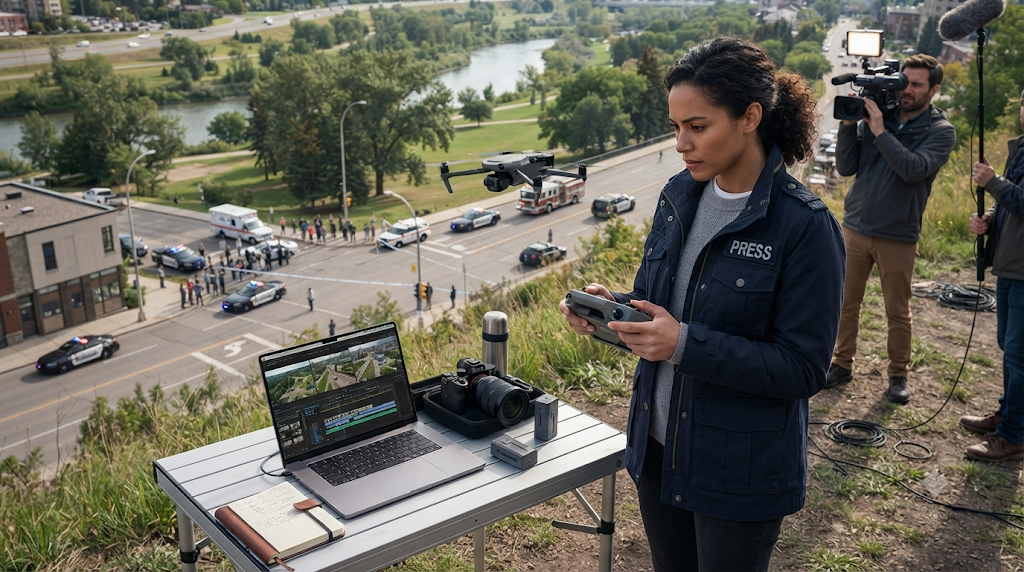
Technology has continually reshaped journalism, from the invention of the printing press to live television broadcasts and digital news platforms. In recent years, one of the most significant innovations in visual reporting has been the use of drones, also known as Unmanned Aerial Vehicles (UAVs). These lightweight aircraft equipped with high-resolution cameras have opened new possibilities for journalists by capturing perspectives that were once expensive, dangerous, or impossible to obtain.
This emerging field, known as drone journalism, allows reporters to document breaking news, natural disasters, environmental changes, protests, sports events, infrastructure projects, and humanitarian crises from the air. Drone footage provides viewers with a broader understanding of events while improving storytelling through stunning aerial visuals and accurate geographical context.
Unlike helicopters or airplanes, drones are relatively affordable, highly maneuverable, and capable of reaching locations that may be inaccessible due to floods, earthquakes, fires, or conflict. As a result, news organizations around the world increasingly incorporate drone footage into television broadcasts, online articles, documentaries, and social media content.
However, drone journalism also presents important responsibilities. Journalists must follow aviation laws, respect privacy rights, maintain ethical reporting standards, and ensure the safety of people on the ground. Proper planning and professional operation are essential to balancing innovative storytelling with public trust.
What Is Drone Journalism?
Drone journalism is the practice of using unmanned aerial vehicles (UAVs) to gather visual information for news reporting.
Journalists use drones to capture:
- Aerial photographs
- High-definition videos
- Live broadcasts
- Environmental documentation
- Disaster coverage
- Investigative footage
The goal is to enhance storytelling by providing unique viewpoints that traditional cameras cannot easily achieve.
Drone journalism complements rather than replaces ground reporting, adding valuable visual context to written articles, interviews, and on-location reporting.
The Evolution of Drone Journalism
Aerial photography once required expensive helicopters, airplanes, or satellite imagery. These methods were often beyond the budgets of local news organizations and independent journalists.
The introduction of compact consumer and professional drones changed the industry by making aerial reporting more affordable and accessible.
Today, drones are regularly used in coverage of:
- Wildfires
- Floods
- Earthquakes
- Political rallies
- Sporting events
- Construction projects
- Environmental investigations
- Agricultural reporting
Advances in camera technology, GPS stabilization, and intelligent flight systems have made drones an essential tool for modern visual journalism.
Why Drone Journalism Matters
Drone journalism improves reporting by offering perspectives that ground-level cameras cannot capture.
It helps audiences:
- Understand the scale of events
- View geographical relationships
- Observe environmental changes
- Visualize disaster impacts
- Gain a broader understanding of complex situations
Instead of relying solely on written descriptions, viewers can see events unfold from above, making stories more informative and engaging.
How Drone Journalism Works
A typical drone journalism workflow includes several stages.
Story Planning
Journalists determine whether aerial footage adds meaningful context to the story.
Not every assignment requires drone coverage.
Flight Preparation
Preparation includes:
- Weather assessment
- Battery inspection
- Equipment checks
- Airspace research
- Permission verification
- Risk assessment
Safety remains the highest priority.
Capturing Footage
Operators fly drones while maintaining legal and visual flight requirements.
Common shots include:
- Wide aerial landscapes
- Tracking shots
- Overhead views
- Slow cinematic movements
- Geographic overviews
Editing
Drone footage is edited alongside:
- Interviews
- Ground footage
- Graphics
- Narration
- Maps
The aerial visuals support—not dominate—the story.
Types of Stories Suitable for Drone Journalism
Natural Disasters
Drone footage provides comprehensive views of:
- Flooding
- Earthquakes
- Hurricanes
- Tornadoes
- Wildfires
It allows audiences to understand damage across large areas.
Environmental Reporting
Environmental journalists use drones to document:
- Deforestation
- Coastal erosion
- Glacier retreat
- River pollution
- Wildlife habitats
Aerial perspectives reveal long-term environmental changes.
Infrastructure Projects
Construction reporting benefits from aerial progress updates.
Examples include:
- Bridges
- Highways
- Railways
- Airports
- Smart cities
Drone footage shows project scale effectively.
Agriculture
Agricultural journalism uses drones to cover:
- Crop conditions
- Irrigation
- Harvesting
- Drought impacts
Aerial imagery helps explain farming trends.
Sports Journalism
Major sporting events increasingly include drone coverage for:
- Stadium overviews
- Race tracking
- Outdoor competitions
- Event highlights
Urban Development
Drone footage documents:
- City expansion
- Housing developments
- Traffic patterns
- Population growth
Urban planning stories become more engaging.
Benefits of Drone Journalism
Unique Perspectives
Drones capture viewpoints unavailable from ground level.
These perspectives improve storytelling significantly.
Cost-Effective Aerial Coverage
Compared to helicopters, drones offer:
- Lower operating costs
- Faster deployment
- Greater flexibility
Even small newsrooms can afford aerial reporting.
Enhanced Storytelling
Aerial footage strengthens:
- Context
- Scale
- Geography
- Visual impact
Readers gain a more complete understanding.
Safer Reporting
Journalists can document dangerous areas without placing themselves at unnecessary risk.
Examples include:
- Flood zones
- Fire areas
- Chemical spills
- Collapsed buildings
Faster Deployment
Many drones can be airborne within minutes.
Rapid response is especially valuable during breaking news.
Equipment Used in Drone Journalism
Professional drone journalists rely on multiple tools.
Drones
Common features include:
- GPS stabilization
- Obstacle avoidance
- 4K or higher cameras
- Long battery life
- Intelligent flight modes
Cameras
Professional drones often include:
- High-resolution sensors
- Adjustable aperture
- RAW photography
- HDR video
Image quality is critical for broadcast journalism.
Remote Controllers
Modern controllers include:
- Live video feeds
- Flight telemetry
- GPS information
- Camera controls
Extra Batteries
Field reporting requires multiple batteries to maximize flight time.
ND Filters
Neutral density filters improve video quality in bright conditions.
Portable Storage
High-resolution footage consumes significant storage space.
Journalists carry:
- Memory cards
- SSD drives
- Backup storage
Legal Considerations
Drone journalism must comply with aviation regulations.
Common legal requirements include:
- Drone registration
- Pilot certification (where required)
- Visual line-of-sight operation
- Maximum altitude limits
- Restricted airspace compliance
- Airport safety rules
Journalists should always verify local laws before flying.
Privacy and Ethical Responsibilities
Drone journalism raises important ethical questions.
Responsible journalists should:
Respect Privacy
Avoid filming individuals in situations where they have a reasonable expectation of privacy.
Minimize Harm
Never interfere with emergency responders or rescue operations.
Avoid Sensationalism
Aerial footage should inform rather than exploit tragedy.
Maintain Transparency
Clearly disclose when drone footage has been captured.
Protect Public Safety
Never operate drones recklessly over crowds or hazardous areas without proper authorization.
Challenges of Drone Journalism
Weather Conditions
Strong winds, rain, snow, and fog may prevent safe flights.
Weather planning is essential.
Limited Battery Life
Most drones fly between 25 and 45 minutes per battery.
Long assignments require multiple batteries.
Airspace Restrictions
Many areas prohibit drone flights, including:
- Airports
- Military zones
- Government facilities
- Temporary restricted zones
Public Perception
Some individuals associate drones with surveillance.
Journalists should communicate openly about their purpose.
Technical Failures
Equipment malfunction can result in:
- Lost footage
- Flight interruptions
- Safety risks
Routine maintenance reduces these risks.
Drone Journalism and Investigative Reporting
Drone journalism supports investigative reporting by documenting:
- Illegal mining
- Environmental violations
- Deforestation
- Coastal damage
- Construction disputes
However, journalists must gather information legally and ethically while respecting applicable laws and property rights.
Drone Journalism and Breaking News
During breaking news events, drones provide rapid aerial assessments.
Examples include:
- Traffic accidents
- Flooding
- Storm damage
- Building fires
- Search and rescue operations
These visuals help viewers quickly understand the overall situation.
Video Editing for Drone Journalism
Drone footage often requires professional editing.
Editors focus on:
- Color correction
- Stabilization
- Shot sequencing
- Transitions
- Graphics
- Narration
The final production should support accurate storytelling rather than prioritize dramatic effects.
Skills Required for Drone Journalists
Successful drone journalists combine technical expertise with traditional reporting skills.
Important abilities include:
- News judgment
- Storytelling
- Drone piloting
- Photography
- Videography
- Video editing
- Mapping
- Aviation knowledge
- Risk assessment
- Ethical decision-making
Continuous training keeps journalists updated with changing technology and regulations.
Best Practices for Drone Journalism
Professional drone journalists should follow these best practices:
- Plan every flight carefully before arriving on location.
- Monitor weather and airspace restrictions.
- Conduct equipment inspections before takeoff.
- Capture aerial footage only when it genuinely enhances the story.
- Respect privacy and avoid unnecessary surveillance.
- Maintain safe distances from people, buildings, and emergency operations.
- Record multiple shot types for flexible editing.
- Keep backup batteries and storage devices available.
- Follow local aviation regulations at all times.
- Prioritize journalistic ethics over dramatic visuals.
Following these practices ensures safe, responsible, and effective aerial reporting.
Future Trends in Drone Journalism
Drone journalism continues evolving alongside new technologies.
Emerging trends include:
AI-Assisted Flight
Artificial intelligence increasingly supports:
- Automated tracking
- Collision avoidance
- Intelligent flight planning
Live Drone Broadcasting
Faster wireless networks allow drones to stream live footage directly to newsrooms.
Thermal Imaging
Thermal cameras assist reporting during:
- Wildfires
- Search operations
- Environmental investigations
3D Mapping
Drone-generated 3D models improve investigative reporting and infrastructure coverage.
Longer Flight Times
Battery improvements will enable extended reporting missions.
Autonomous Reporting Systems
Future drones may perform pre-programmed aerial documentation while journalists focus on storytelling and analysis.
Conclusion
Drone journalism has transformed modern news reporting by making aerial photography and videography more affordable, accessible, and informative than ever before. From documenting natural disasters and environmental changes to covering infrastructure projects and breaking news, drones provide perspectives that enrich storytelling and help audiences better understand complex events.
While the technology offers remarkable opportunities, successful drone journalism depends on much more than capturing impressive visuals. Journalists must operate responsibly, follow aviation regulations, respect privacy, prioritize public safety, and uphold the highest standards of accuracy and ethics. Aerial footage should enhance the story—not overshadow the facts.
As drone capabilities continue to improve through artificial intelligence, live broadcasting, advanced imaging, and longer flight times, aerial reporting will become an even more valuable component of multimedia journalism. News organizations and independent reporters who combine technical expertise with responsible reporting practices will be well positioned to deliver compelling, trustworthy stories from entirely new perspectives.
Frequently Asked Questions
1. What is drone journalism?
Drone journalism is the use of unmanned aerial vehicles (UAVs) equipped with cameras to capture aerial photos and videos for news reporting, documentaries, and multimedia storytelling.
2. Why do journalists use drones?
Journalists use drones to provide unique aerial perspectives, improve visual storytelling, document large-scale events, safely cover hazardous locations, and give audiences a broader understanding of news events.
3. Is drone journalism legal?
Yes, but journalists must follow the drone regulations and aviation laws of the country where they operate, including registration requirements, flight restrictions, and privacy rules.
4. What equipment is needed for drone journalism?
Essential equipment includes a professional drone with a high-resolution camera, remote controller, extra batteries, memory cards, ND filters, portable storage devices, and video editing software.
5. What are the biggest challenges in drone journalism?
Common challenges include weather conditions, limited battery life, restricted airspace, privacy concerns, technical failures, legal compliance, and maintaining ethical reporting standards while capturing aerial footage.