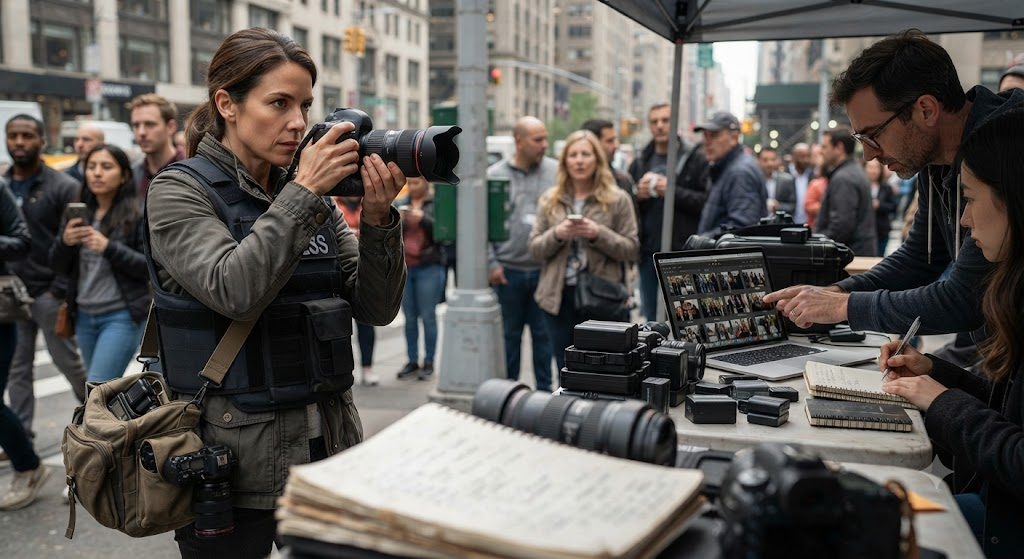
Photojournalism has the unique ability to tell powerful stories through a single image. A photograph can capture joy, tragedy, conflict, resilience, and history in ways that words alone often cannot. From documenting natural disasters and humanitarian crises to celebrating sporting victories and cultural traditions, photojournalists help people witness events happening around the world.
However, with this power comes a significant responsibility. Every image published by a news organization can shape public opinion, influence emotions, and become part of the historical record. Because of this, ethical photojournalism is built on principles of truthfulness, accuracy, fairness, respect, and accountability.
In today’s digital era—where smartphones, social media, artificial intelligence (AI), and image-editing software have made creating and sharing images easier than ever—the importance of ethical photojournalism has never been greater. Audiences expect authentic visual reporting, while news organizations must work harder to maintain credibility in an age of misinformation and manipulated content.
What Is Ethical Photojournalism?
Ethical photojournalism is the practice of capturing, editing, and publishing photographs in a way that accurately represents reality while respecting the dignity, privacy, and rights of the people being photographed.
Unlike commercial photography or artistic photography, photojournalism aims to document real events without staging, manipulating, or misleading viewers.
The primary goal is to inform the public through truthful visual storytelling.
Professional photojournalists are expected to present events honestly, allowing audiences to interpret the story based on authentic evidence rather than altered imagery.
Why Ethics Matter in Photojournalism
Photographs often have a stronger emotional impact than written articles. A single powerful image can influence public opinion, inspire humanitarian action, expose injustice, or become a symbol of historical events.
Because images carry such influence, unethical practices can have serious consequences.
Ethical photojournalism helps:
- Build public trust.
- Preserve historical accuracy.
- Prevent misinformation.
- Protect vulnerable individuals.
- Promote responsible journalism.
- Maintain newsroom credibility.
- Support informed public discussion.
Without ethical standards, visual journalism risks becoming propaganda, entertainment, or manipulation rather than factual reporting.
The Core Principles of Ethical Photojournalism
Professional photojournalists follow several guiding principles that ensure responsible reporting.
1. Accuracy
Accuracy is the foundation of ethical journalism.
Photographs should truthfully represent the events being documented without altering reality.
This means:
- Capturing genuine moments.
- Providing accurate captions.
- Identifying people correctly.
- Reporting locations honestly.
- Explaining the context of the image.
Misleading captions can be just as harmful as manipulated photographs.
2. Honesty
Photojournalists should never intentionally deceive viewers.
Honesty requires photographers to avoid:
- Staging events.
- Asking subjects to recreate moments.
- Directing emotional reactions.
- Creating false narratives.
Authentic storytelling depends on genuine observation rather than manufactured scenes.
3. Independence
Journalists must remain independent from political groups, businesses, governments, or organizations that could influence their reporting.
Independent photojournalists focus on documenting facts rather than promoting particular viewpoints.
4. Fairness
Ethical reporting requires presenting events fairly.
Photographers should avoid intentionally selecting images that unfairly distort the reality of a situation.
For example, photographing only empty seats at a large public event may create a misleading impression if the event was otherwise well attended.
Balanced visual coverage helps audiences understand the complete story.
5. Accountability
Professional journalists accept responsibility for their work.
When errors occur, they should:
- Correct inaccurate captions.
- Clarify misleading information.
- Explain editorial decisions.
- Maintain transparency.
Accountability strengthens public confidence in journalism.
Respect for Human Dignity
Ethical photojournalism recognizes that every person deserves dignity and respect.
This is especially important when covering:
- Natural disasters
- Armed conflicts
- Medical emergencies
- Homelessness
- Poverty
- Crime scenes
- Refugee crises
Photographers should ask themselves:
- Does this image respect the individual’s dignity?
- Is publication in the public interest?
- Could the photograph cause unnecessary harm?
Responsible journalism balances public awareness with compassion.
Privacy and Consent
Privacy remains one of the most debated issues in photojournalism.
While newsworthy events often occur in public spaces, photographers should still consider the rights and expectations of the people involved.
Extra care should be taken when photographing:
- Children
- Hospital patients
- Victims of violence
- Individuals experiencing grief
- Survivors of trauma
Whenever possible, obtaining consent demonstrates respect and helps maintain ethical standards.
Avoiding Image Manipulation
Digital editing has made altering photographs easier than ever.
However, ethical photojournalism limits editing to basic technical improvements.
Acceptable adjustments generally include:
- Exposure correction
- White balance
- Minor cropping
- Color accuracy
- Dust removal
Unethical alterations include:
- Adding objects.
- Removing people.
- Combining multiple images.
- Changing backgrounds.
- Altering facial expressions.
- Modifying important visual details.
Any edit that changes the meaning of an image undermines journalistic integrity.
The Importance of Context
Even authentic photographs can become misleading when presented without proper context.
Responsible photojournalists provide:
- Accurate captions
- Dates
- Locations
- Names
- Background information
Without context, viewers may misunderstand what they are seeing.
For example, an image from a past protest should not be presented as though it depicts a current event.
Common Ethical Challenges in Photojournalism
Covering Tragedy
Natural disasters, accidents, and violent incidents present difficult ethical decisions.
Journalists must balance:
- Public interest
- Victim dignity
- Family privacy
- News value
Graphic imagery should only be published when it significantly contributes to public understanding.
Photographing Children
Children deserve additional protection.
Ethical considerations include:
- Safety
- Consent
- Privacy
- Long-term impact
Many news organizations have strict policies regarding images of minors.
Conflict Reporting
War photography often documents violence and suffering.
Photojournalists must avoid:
- Exploiting victims
- Encouraging dangerous behavior
- Becoming participants in events
Their role is to observe and document.
Crime Reporting
Crime scenes require sensitivity.
Journalists should avoid unnecessarily revealing victims’ identities or causing additional distress to affected families.
AI and Ethical Photojournalism
Artificial intelligence has introduced new opportunities and new risks.
AI can assist with:
- Image organization
- Caption generation
- Metadata management
- Workflow automation
However, AI-generated or AI-altered images must never be presented as authentic documentary photographs.
News organizations increasingly require transparency regarding AI-assisted content.
Maintaining a clear distinction between real photographs and AI-generated visuals is essential for preserving public trust.
Social Media and Visual Journalism
Social media has transformed how photographs are distributed.
Benefits include:
- Faster reporting
- Wider audiences
- Citizen journalism
- Real-time updates
Challenges include:
- Image theft
- Misinformation
- Edited screenshots
- Misleading captions
- Lack of verification
Professional journalists should verify user-generated content before publication.
Verifying Images Before Publication
Verification has become a critical newsroom responsibility.
Editors often confirm:
- Date captured
- GPS location
- Weather conditions
- Landmarks
- Metadata
- Original source
- Reverse image search results
Verification helps prevent recycled or manipulated images from entering legitimate news coverage.
Diversity and Representation
Ethical journalism should accurately reflect diverse communities.
Photojournalists should avoid:
- Reinforcing stereotypes
- Selective representation
- Cultural bias
- Sensationalism
Balanced coverage creates a more accurate picture of society.
Objectivity in Visual Storytelling
Complete objectivity may be difficult to achieve because photographers make choices about:
- Angle
- Timing
- Composition
- Lens selection
However, ethical photojournalists strive to minimize personal bias by documenting events honestly and providing accurate context.
Challenges in the Digital Era
Modern technology has created several new ethical issues.
These include:
- Deepfake images
- AI-generated portraits
- Synthetic backgrounds
- Image cloning
- Viral misinformation
- Fake social media accounts
- Copyright violations
News organizations continue updating editorial guidelines to address these challenges.
Best Practices for Ethical Photojournalists
Professional photographers can strengthen ethical reporting by following these practices:
- Tell the truth through images.
- Avoid staging events.
- Respect privacy whenever possible.
- Protect vulnerable individuals.
- Verify image authenticity.
- Write accurate captions.
- Edit responsibly.
- Be transparent about methods.
- Follow newsroom ethics policies.
- Continue learning about emerging technologies.
These practices help maintain public trust and journalistic credibility.
The Role of Editors
Editors play an essential role in ethical photojournalism.
They review images for:
- Accuracy
- Context
- Fairness
- Technical quality
- Ethical concerns
- Caption correctness
Editorial oversight provides an additional safeguard against errors or unethical practices.
Legal Considerations
Photojournalists must also understand applicable laws regarding:
- Copyright
- Privacy
- Public spaces
- Defamation
- Trespassing
- Intellectual property
- Licensing
Legal compliance complements ethical decision-making.
Building Public Trust
Trust is earned through consistent ethical behavior.
Audiences are more likely to believe organizations that:
- Correct mistakes promptly.
- Explain editorial decisions.
- Verify information carefully.
- Maintain transparency.
- Follow established ethical standards.
Responsible journalism strengthens democratic societies by providing reliable information.
The Future of Ethical Photojournalism
Technology will continue changing visual storytelling.
Future developments may include:
- AI-assisted verification
- Blockchain image authentication
- Digital watermarking
- Advanced deepfake detection
- Automated metadata validation
Despite these innovations, ethical principles will remain unchanged.
Truthfulness, accuracy, fairness, accountability, and respect for human dignity will continue to guide responsible photojournalism.
Conclusion
Ethical photojournalism is about much more than taking compelling photographs. It is a commitment to documenting reality with honesty, integrity, and compassion. Every image published has the potential to educate, inspire, or influence millions of people, making ethical decision-making an essential part of the profession.
As digital technology, AI, and social media continue to reshape the media landscape, maintaining high ethical standards becomes increasingly important. By avoiding manipulation, respecting privacy, verifying information, and presenting accurate visual context, photojournalists help preserve public trust and ensure that photography remains a powerful tool for truthful storytelling.
Ultimately, ethical photojournalism protects not only the people being photographed but also the credibility of journalism itself. In a world flooded with visual content, authenticity remains the strongest foundation for responsible reporting.
Frequently Asked Questions
1. What is ethical photojournalism?
Ethical photojournalism is the practice of capturing and publishing authentic photographs that accurately represent real events while respecting truth, privacy, dignity, and journalistic integrity.
2. Why is ethics important in photojournalism?
Ethics helps ensure photographs are truthful, prevent misinformation, protect vulnerable individuals, preserve public trust, and maintain the credibility of news organizations.
3. Can photojournalists edit their photographs?
Yes, but only minor adjustments such as exposure, color correction, and cropping are generally acceptable. Edits that alter the meaning or content of an image are considered unethical.
4. How does AI affect ethical photojournalism?
AI can assist with workflows and image management, but AI-generated or significantly altered images should never be presented as authentic documentary photographs without clear disclosure.
5. What qualities make a good ethical photojournalist?
An ethical photojournalist values honesty, accuracy, fairness, compassion, accountability, respect for privacy, strong verification practices, and a commitment to telling truthful visual stories.