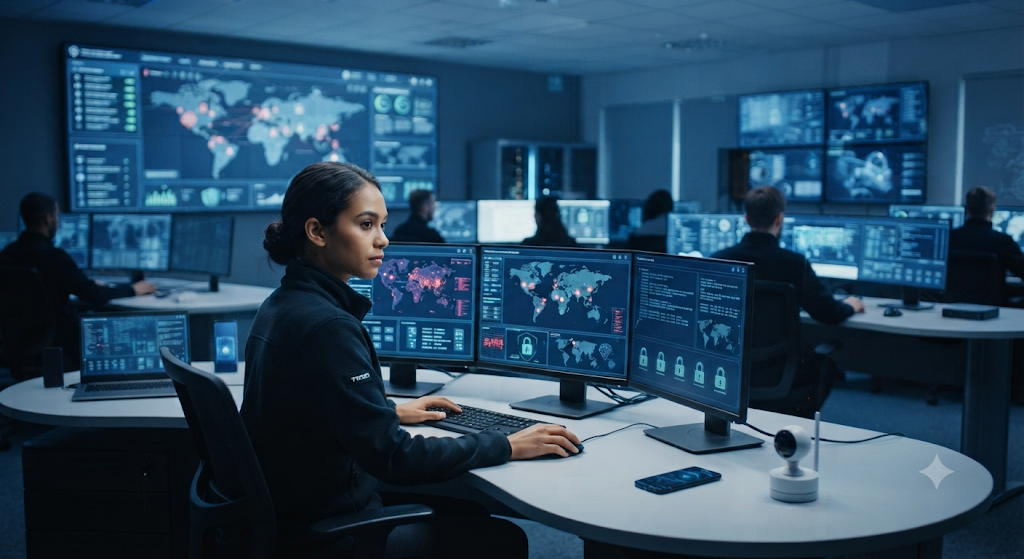
Not long ago, cybersecurity was considered a concern primarily for governments, large corporations, banks, and IT professionals. Most individuals assumed that cyberattacks targeted only organizations with valuable financial or confidential information. If you simply used the internet to browse websites, send emails, or shop online, cybersecurity probably wasn’t something you thought about every day.
That has changed dramatically.
Today, almost everyone owns a smartphone, shops online, uses digital payment apps, stores personal photos in the cloud, manages finances through mobile banking, and communicates via social media or messaging platforms. Every digital interaction creates data, and every connected device becomes a potential target for cybercriminals.
Cybersecurity is no longer just an IT department’s responsibility—it has become everyone’s responsibility.
Whether you’re a student attending online classes, a freelancer working remotely, a small business owner accepting digital payments, or a retiree using online banking, protecting your digital identity has become an essential life skill.
As cyber threats continue to evolve, understanding basic cybersecurity practices is no longer optional. It is a necessity for safeguarding personal information, financial assets, and digital privacy.
The Digital Revolution Changed Everything
The internet has transformed nearly every aspect of modern life.
Today we use digital platforms for:
- Banking
- Shopping
- Education
- Healthcare
- Entertainment
- Government services
- Remote work
- Travel bookings
- Investments
- Communication
This convenience has created enormous opportunities—but it has also expanded the attack surface for cybercriminals.
Every connected account represents another possible entry point.
The more connected society becomes, the more important cybersecurity becomes.
Why Cybersecurity Is No Longer Just an IT Problem
In the past, companies relied on centralized computer systems protected by office firewalls and dedicated IT teams.
Today’s digital world looks very different.
People now work from:
- Home offices
- Coffee shops
- Airports
- Hotels
- Mobile devices
Employees often use personal smartphones and laptops to access business information.
Families share smart TVs, security cameras, voice assistants, and connected appliances.
This shift has blurred the line between personal and professional cybersecurity.
A single weak password on a personal device can potentially expose an entire organization’s data.
The Rise of Everyday Cyber Threats
Cyberattacks are no longer rare events.
Many people encounter digital threats regularly without even realizing it.
Common examples include:
- Phishing emails
- Fake shopping websites
- Social media scams
- Identity theft
- Malware
- Ransomware
- Fraudulent investment schemes
- Fake customer support calls
These attacks often target ordinary users rather than large corporations.
Why Personal Data Has Become Extremely Valuable
Many people wonder why hackers would target them.
The answer is simple:
Personal data has significant value.
Information such as:
- Email addresses
- Passwords
- Phone numbers
- Banking information
- Credit card details
- Government identification
- Medical records
can all be exploited for financial fraud or identity theft.
Even seemingly harmless information may be combined with other data to launch more sophisticated attacks.
Remote Work Expanded Cyber Risks
The rise of remote and hybrid work has transformed cybersecurity.
Employees now connect to company systems using:
- Home Wi-Fi
- Personal devices
- Public internet connections
Without proper security measures, these environments may increase cyber risks.
Organizations increasingly train employees to recognize cyber threats because human error remains one of the leading causes of security incidents.
The Human Factor in Cybersecurity
Technology alone cannot stop cybercrime.
People remain the first line of defense.
Simple mistakes such as:
- Clicking suspicious links
- Reusing passwords
- Downloading unknown files
- Sharing sensitive information
can compromise even sophisticated security systems.
Cybersecurity awareness is therefore just as important as cybersecurity software.
Understanding Phishing Attacks
Phishing remains one of the most common cyber threats worldwide.
Attackers send messages pretending to be:
- Banks
- Government agencies
- Delivery companies
- Employers
- Streaming services
Their goal is to trick users into revealing confidential information.
Warning signs include:
- Urgent language
- Unexpected attachments
- Suspicious links
- Requests for passwords
- Poor grammar
When in doubt, verify requests directly through official channels.
Password Security Matters More Than Ever
Weak passwords continue to be a major security vulnerability.
Examples of poor passwords include:
- 123456
- Password
- Qwerty
- Birthdates
Instead:
- Create long passwords
- Mix letters, numbers, and symbols
- Avoid personal information
- Use unique passwords for every account
Password managers can help generate and securely store complex passwords.
Why Multi-Factor Authentication Is Essential
Even strong passwords can sometimes be compromised.
Multi-factor authentication (MFA) adds an extra layer of security.
It typically requires:
- Password
- Verification code
- Authentication app
- Fingerprint
- Face recognition
This additional verification significantly reduces unauthorized access.
Social Media and Privacy Risks
Social media encourages sharing.
However, oversharing personal information can create security risks.
Avoid publicly posting:
- Home addresses
- Travel plans
- Financial information
- Identification documents
- Personal security answers
Cybercriminals often collect information from social media profiles.
Cybersecurity for Online Shopping
Online shopping continues to grow.
To stay safe:
- Shop on reputable websites
- Look for HTTPS encryption
- Avoid suspicious discounts
- Verify seller reputation
- Use secure payment methods
Monitor bank statements regularly for unauthorized transactions.
Protecting Mobile Devices
Smartphones now contain enormous amounts of sensitive data.
Protect them by:
- Using screen locks
- Enabling biometric security
- Updating operating systems
- Installing apps only from trusted sources
- Avoiding unknown links
Lost phones should be remotely locked or erased when possible.
Software Updates Protect Against Threats
Updates do more than introduce new features.
They often patch security vulnerabilities discovered by researchers.
Ignoring updates leaves devices exposed.
Enable automatic updates whenever possible.
Cybersecurity and Small Businesses
Small businesses increasingly face cyberattacks because they often have fewer security resources.
Business owners should:
- Train employees
- Back up data
- Use antivirus software
- Secure Wi-Fi networks
- Limit user permissions
Even simple precautions greatly reduce risk.
The Growing Threat of Ransomware
Ransomware encrypts files and demands payment for restoration.
Victims may lose access to:
- Business records
- Customer information
- Financial documents
- Personal photos
Regular backups remain one of the best defenses.
Artificial Intelligence Is Changing Cybersecurity
AI benefits both defenders and attackers.
Positive applications include:
- Fraud detection
- Threat monitoring
- Automated response
- Behavioral analysis
However, attackers also use AI to create:
- More convincing phishing emails
- Automated attacks
- Deepfake scams
This ongoing technological race continues to evolve.
Children and Online Safety
Young internet users require guidance.
Parents should teach:
- Safe password habits
- Stranger awareness
- Privacy settings
- Responsible social media use
- Reporting suspicious activity
Digital literacy begins at home.
The Importance of Regular Data Backups
Backups protect against:
- Hardware failures
- Ransomware
- Accidental deletion
- Device theft
The 3-2-1 rule is widely recommended:
- Three copies of data
- Two different storage methods
- One offsite backup
Cybersecurity Best Practices Everyone Should Follow
Protect yourself by following these habits:
- Use unique passwords.
- Enable MFA.
- Keep software updated.
- Avoid suspicious links.
- Verify emails before responding.
- Back up important files.
- Secure home Wi-Fi.
- Install trusted antivirus software.
- Review privacy settings regularly.
- Stay informed about new threats.
Why Cybersecurity Awareness Is More Important Than Ever
Technology will continue evolving.
Artificial intelligence, smart homes, wearable devices, autonomous vehicles, and connected healthcare systems will create even more digital connections.
Every innovation introduces both opportunities and risks.
Cybersecurity awareness must evolve alongside technology.
The goal is not fear.
The goal is informed, responsible digital behavior.
The Future of Cybersecurity
Emerging technologies shaping cybersecurity include:
- AI-powered security tools
- Biometric authentication
- Zero Trust architecture
- Passwordless authentication
- Quantum-resistant encryption
- Behavioral analytics
Organizations and individuals alike will need to adapt continuously.
Conclusion
Cybersecurity has evolved from a specialized IT concern into a shared responsibility that affects every internet user. As our lives become increasingly connected through smartphones, cloud services, online banking, digital payments, remote work, and smart devices, protecting personal information has become just as important as protecting our physical belongings.
Fortunately, staying safe online doesn’t always require advanced technical knowledge. Simple habits such as creating strong passwords, enabling multi-factor authentication, updating software, recognizing phishing attempts, and backing up important data can significantly reduce the risk of cyberattacks.
The digital world will continue to expand, bringing new technologies and new opportunities. At the same time, cyber threats will continue to evolve. By developing strong cybersecurity habits today, individuals, families, and businesses can enjoy the benefits of technology while minimizing the risks.
Cybersecurity is no longer someone else’s job. It is a shared responsibility that begins with every click, every password, and every online decision we make.
Frequently Asked Questions
1. Why is cybersecurity everyone’s responsibility today?
Because nearly everyone uses internet-connected devices for banking, shopping, communication, work, and entertainment. Personal actions, such as using strong passwords and avoiding phishing scams, play a critical role in preventing cyber threats.
2. What are the most common cybersecurity threats?
Some of the most common threats include phishing emails, malware, ransomware, identity theft, fake websites, social engineering attacks, and data breaches.
3. How can I improve my online security?
You can improve your security by using unique passwords, enabling multi-factor authentication, keeping your software updated, avoiding suspicious links, and regularly backing up important files.
4. What is multi-factor authentication (MFA)?
Multi-factor authentication is an additional security measure that requires two or more forms of verification—such as a password and a one-time code—before granting access to an account.
5. Are small businesses also at risk of cyberattacks?
Yes. Small businesses are frequent targets because they may have fewer cybersecurity resources than larger organizations. Implementing basic security measures and employee training can greatly reduce cyber risks.