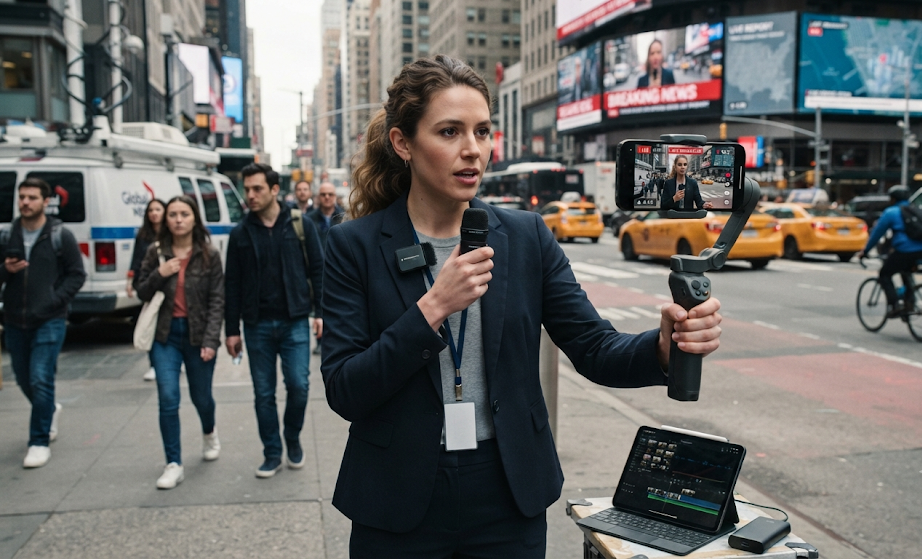
Not long ago, news reporting depended on television crews, newspaper reporters, bulky cameras, and satellite broadcasting equipment. Breaking news often took hours—or even days—to reach the public. Journalists had to travel to the scene, gather information, return to the newsroom, edit their reports, and wait for publication or broadcast.
Today, the process looks completely different.
A single smartphone can record high-quality video, capture professional photographs, conduct live interviews, edit footage, write stories, and publish breaking news to millions of people within minutes. Mobile phones have fundamentally transformed journalism, making news faster, more accessible, and more interactive than ever before.
Whether it’s a natural disaster, political event, sporting competition, or local community story, mobile phones have become one of the most powerful tools in modern reporting. They have empowered professional journalists, enabled citizen journalism, accelerated the spread of information, and changed how audiences consume news.
This digital transformation has reshaped every stage of the reporting process—from gathering information to publishing content and engaging with readers. While mobile technology has created remarkable opportunities, it has also introduced new challenges related to misinformation, verification, ethics, and digital security.
The Evolution of News Reporting
Before smartphones became commonplace, journalism relied on traditional tools and slower communication methods.
Reporters often carried:
- Professional video cameras
- Audio recorders
- Notebooks
- DSLR cameras
- Satellite phones
- Laptop computers
News gathering required multiple pieces of equipment and significant logistical planning.
Stories often passed through several editorial stages before reaching the audience.
Although this process maintained high editorial standards, it limited speed.
The arrival of smartphones changed everything.
Smartphones Became Complete Newsrooms
Modern smartphones combine multiple professional tools into a single device.
Today’s mobile phones can:
- Record 4K and even 8K video
- Capture high-resolution images
- Record professional-quality audio
- Edit videos
- Write articles
- Conduct video interviews
- Livestream events
- Upload content instantly
Instead of carrying several devices, journalists often carry only one smartphone.
This has dramatically reduced production time while increasing reporting flexibility.
Breaking News Happens Faster Than Ever
Speed has become one of the defining characteristics of digital journalism.
When major events occur, journalists no longer wait to return to the newsroom.
Instead, they can immediately:
- Record footage
- Take photographs
- Interview witnesses
- Publish updates
- Livestream developments
This allows audiences to receive real-time information while events are still unfolding.
Breaking news has become truly immediate.
Citizen Journalism Changed the News Landscape
One of the biggest impacts of mobile phones has been the rise of citizen journalism.
Ordinary people now document important events using their smartphones.
Examples include:
- Natural disasters
- Public protests
- Traffic accidents
- Weather events
- Community celebrations
- Public emergencies
Many of today’s major news stories first appear on social media through eyewitnesses before professional journalists arrive.
This has expanded the sources of information available to news organizations.
Social Media Accelerated News Distribution
Mobile phones and social media have become inseparable.
Platforms such as:
- X (formerly Twitter)
- TikTok
- YouTube
allow journalists to publish stories instantly.
Instead of waiting for scheduled broadcasts, audiences receive news notifications directly on their phones.
This constant connectivity has transformed audience expectations.
People now expect immediate updates.
Live Streaming Changed Event Coverage
Smartphones have made live reporting easier than ever.
Journalists can now broadcast:
- Press conferences
- Elections
- Sports events
- Natural disasters
- Political speeches
- Public demonstrations
Live streaming increases transparency because audiences witness events as they happen.
It also reduces production costs compared to traditional television broadcasting.
Mobile Journalism (MoJo)
A growing field known as Mobile Journalism, or MoJo, focuses on producing professional news entirely using smartphones.
Many news organizations now train reporters in:
- Mobile photography
- Mobile video editing
- Smartphone broadcasting
- Social media reporting
- Mobile storytelling
MoJo demonstrates that professional journalism no longer requires expensive equipment.
Skill matters more than hardware.
Mobile Phones Improved Field Reporting
Traditional reporting often required large camera crews.
Today, a single journalist can cover an entire event independently.
Benefits include:
- Faster mobility
- Lower costs
- Easier travel
- Greater flexibility
- Faster publishing
This has expanded coverage in remote and difficult-to-access locations.
Better Photography Changed Storytelling
Smartphone cameras have improved dramatically.
Modern devices include:
- Optical image stabilization
- Night photography
- AI-powered enhancement
- Portrait mode
- Wide-angle lenses
- Telephoto zoom
These features enable journalists to capture compelling visuals using devices that fit in their pockets.
Visual storytelling has become richer than ever.
Video Journalism Is Growing
Audiences increasingly prefer video content.
Mobile phones make video journalism accessible.
Popular formats include:
- Short news clips
- Interviews
- Documentary segments
- Explainer videos
- Live coverage
- Behind-the-scenes reporting
Video improves audience engagement while increasing time spent on news platforms.
Faster Communication with Newsrooms
Messaging apps have transformed newsroom communication.
Reporters now instantly share:
- Photos
- Videos
- Interview recordings
- Documents
- Live updates
Editors can review content immediately, accelerating publication.
GPS and Location Services Improved Reporting
Location technology has enhanced accuracy.
Journalists can verify:
- Event locations
- Travel routes
- Disaster zones
- Crime scenes
GPS data also helps organize multimedia content.
Artificial Intelligence Supports Mobile Reporting
AI now assists journalists using smartphones.
Common applications include:
- Speech-to-text transcription
- Language translation
- Automatic captions
- Photo enhancement
- Content recommendations
- Interview summaries
These tools reduce production time.
Mobile Phones Expanded Global Coverage
Remote communities once received little media attention.
Today, smartphone reporting allows journalists to publish stories from almost anywhere with internet access.
This has increased representation across diverse regions.
Challenges Created by Mobile Journalism
Despite many benefits, smartphones also introduce challenges.
Common concerns include:
Misinformation
False information spreads quickly through mobile platforms.
Verification has become essential.
Deepfakes
AI-generated images and videos create verification challenges.
Journalists must confirm authenticity before publication.
Privacy
Recording in public raises ethical questions.
Responsible journalism balances public interest with individual privacy.
Information Overload
Audiences receive enormous amounts of information every day.
News organizations compete for attention.
Fact-Checking Matters More Than Ever
Because information spreads rapidly, verification remains a core journalistic responsibility.
Professional reporters should:
- Confirm sources
- Cross-check facts
- Verify images
- Review timestamps
- Confirm locations
Accuracy remains more valuable than speed alone.
Mobile Phones Changed Audience Expectations
Today’s readers expect:
- Instant updates
- Live video
- Interactive graphics
- Push notifications
- Mobile-friendly articles
News organizations have adapted accordingly.
News Apps Became Primary Information Sources
Dedicated news applications provide:
- Personalized news feeds
- Real-time alerts
- Offline reading
- Video content
- Audio news
Many people now consume most of their news through smartphones rather than television.
Mobile Advertising Supports Digital Journalism
Smartphone usage has reshaped advertising.
Publishers increasingly rely on:
- Mobile display ads
- Sponsored content
- Native advertising
- Subscription models
Revenue strategies continue evolving alongside audience behavior.
The Rise of Multimedia Storytelling
Modern journalism combines:
- Text
- Video
- Photography
- Infographics
- Interactive maps
- Podcasts
Smartphones support nearly every storytelling format.
News Became More Interactive
Readers now:
- Comment
- Share
- React
- Participate
- Submit eyewitness content
Journalism has become a two-way conversation.
Security Risks for Journalists
Mobile reporting introduces cybersecurity challenges.
Journalists should protect:
- Devices
- Sources
- Communications
- Cloud storage
Encryption and secure messaging have become increasingly important.
Education and Journalism Training
Journalism schools increasingly teach:
- Smartphone reporting
- Social media ethics
- Mobile editing
- Digital verification
- Audience engagement
The profession continues evolving.
The Future of Mobile Journalism
Mobile journalism will continue advancing through innovations such as:
Artificial Intelligence
Smarter editing tools.
5G and Beyond
Faster uploads and higher-quality livestreams.
Augmented Reality
Interactive storytelling experiences.
Wearable Devices
Smart glasses and body cameras may complement smartphones.
AI Verification
Real-time detection of manipulated media.
Why Mobile Phones Will Remain Essential
Despite changing technologies, smartphones offer unmatched advantages:
- Portability
- Speed
- Affordability
- Connectivity
- Versatility
They have democratized journalism by allowing more voices to participate in storytelling.
Best Practices for Mobile Journalists
Successful mobile reporters should:
- Verify every source.
- Protect sensitive information.
- Use professional audio when possible.
- Maintain ethical standards.
- Prioritize accuracy over speed.
- Keep equipment charged.
- Back up important files.
Technology enhances journalism, but credibility still depends on responsible reporting.
Conclusion
Mobile phones have permanently transformed news reporting, reshaping how stories are discovered, reported, published, and consumed. What once required large news crews and expensive broadcasting equipment can now be accomplished with a single smartphone connected to the internet. From breaking news and live streaming to citizen journalism and multimedia storytelling, smartphones have made journalism faster, more accessible, and more interactive than ever before.
At the same time, this transformation has brought new responsibilities. The speed of mobile reporting must be balanced with accuracy, ethical standards, and thorough fact-checking to maintain public trust. As technologies such as artificial intelligence, 5G, and augmented reality continue to evolve, mobile journalism will become even more powerful, offering richer storytelling experiences and broader global reach.
Ultimately, while the tools of journalism have changed dramatically, its core mission remains the same: delivering accurate, timely, and trustworthy information that helps people understand the world around them.
Frequently Asked Questions
1. How have mobile phones changed news reporting?
Mobile phones have made news reporting faster, more flexible, and more accessible by allowing journalists to capture photos, record videos, conduct interviews, edit content, and publish stories directly from the field.
2. What is mobile journalism (MoJo)?
Mobile journalism, or MoJo, is the practice of producing news content using smartphones and mobile devices for reporting, filming, editing, and publishing stories.
3. How do smartphones support breaking news coverage?
Smartphones enable journalists and eyewitnesses to instantly record events, livestream developments, and share updates through news websites and social media, helping audiences receive real-time information.
4. What are the challenges of mobile journalism?
Some challenges include the rapid spread of misinformation, verifying user-generated content, protecting privacy, cybersecurity risks, and maintaining journalistic accuracy while reporting quickly.
5. What is the future of mobile journalism?
The future of mobile journalism includes greater use of artificial intelligence, faster 5G and future networks, augmented reality storytelling, improved mobile editing tools, and enhanced fact-checking technologies, making news reporting even more efficient and interactive.