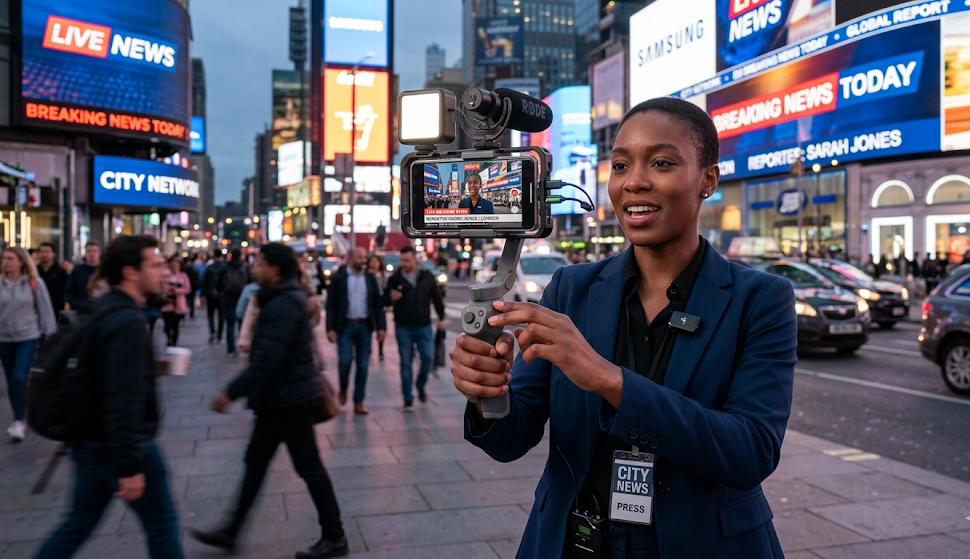
The journalism industry has experienced dramatic changes over the past two decades. Traditional reporting methods that once relied heavily on television cameras, satellite trucks, bulky recording equipment, and newsroom-based editing systems are rapidly evolving. Technological advancements have transformed how news is gathered, produced, distributed, and consumed. At the center of this transformation is Mobile Journalism, commonly known as MoJo.
Mobile Journalism refers to the practice of creating, editing, and publishing news content using mobile devices such as smartphones and tablets. What was once considered a supplementary reporting tool has become a primary method of news production for journalists worldwide. Modern smartphones are now equipped with high-resolution cameras, advanced audio capabilities, editing applications, and instant internet connectivity, enabling reporters to cover events quickly and efficiently from virtually any location.
As audiences increasingly demand real-time updates and multimedia content, Mobile Journalism is emerging as the future of news reporting. It offers speed, flexibility, affordability, and accessibility that traditional reporting methods often struggle to match. News organizations, independent journalists, content creators, and media companies are embracing MoJo as a powerful solution for modern storytelling.
What Is Mobile Journalism?
Mobile Journalism is the process of gathering, producing, editing, and sharing news content primarily through mobile devices.
A mobile journalist can perform multiple tasks using a smartphone, including:
- Recording video interviews
- Capturing photographs
- Conducting live broadcasts
- Writing news articles
- Editing multimedia content
- Publishing stories online
- Engaging with audiences through social media
Unlike traditional reporting, which often requires large teams and expensive equipment, Mobile Journalism enables a single journalist to manage the entire reporting process.
This approach has significantly changed how news organizations operate and how stories reach audiences.
The Evolution of Mobile Journalism
The concept of Mobile Journalism began gaining attention during the early smartphone revolution.
Initially, mobile devices were used mainly for communication and quick updates. However, improvements in mobile technology soon transformed smartphones into powerful reporting tools.
Several developments accelerated the growth of MoJo:
Improved Smartphone Cameras
Modern smartphones now offer professional-quality video and photography capabilities.
Features include:
- 4K and 8K video recording
- Optical image stabilization
- Advanced low-light performance
- Multiple camera lenses
- AI-powered image enhancement
These advancements allow journalists to capture broadcast-quality content using devices that fit in their pockets.
Faster Internet Connectivity
The introduction of 4G and 5G networks has enabled journalists to upload content instantly from the field.
Live reporting, once dependent on expensive satellite equipment, can now be conducted using mobile networks.
Mobile Editing Applications
Powerful editing apps have eliminated the need for traditional editing suites.
Journalists can now:
- Edit videos
- Add graphics
- Enhance audio
- Create captions
- Publish content
all from a smartphone.
Social Media Integration
Social platforms have become major news distribution channels.
Mobile devices allow journalists to publish stories directly to audiences in real time.
Why Mobile Journalism Is Growing Rapidly
Several factors explain why Mobile Journalism has become one of the fastest-growing trends in media.
Speed of Reporting
News breaks quickly in today’s digital world.
Audiences expect updates within minutes rather than hours.
Mobile journalists can:
- Capture events instantly
- Edit content on-site
- Publish immediately
This speed gives media organizations a significant competitive advantage.
Cost Efficiency
Traditional reporting equipment can be expensive.
News organizations often invest in:
- Cameras
- Lighting systems
- Microphones
- Production vehicles
- Editing software
Mobile Journalism significantly reduces these costs.
A smartphone combined with a few affordable accessories can replace much of the traditional equipment required for field reporting.
Increased Accessibility
Mobile Journalism lowers barriers to entry.
Independent journalists, freelancers, students, and local reporters can create professional-quality content without large budgets.
This accessibility has democratized journalism and expanded opportunities for diverse voices.
Greater Flexibility
Mobile journalists can work from virtually any location.
Whether covering:
- Natural disasters
- Political events
- Sports competitions
- Community gatherings
reporters can move quickly and operate with minimal equipment.
Essential Tools for Mobile Journalism
While smartphones serve as the foundation of Mobile Journalism, additional tools can improve content quality.
Smartphones
The smartphone remains the most important tool.
Journalists typically prioritize:
- Camera quality
- Battery life
- Storage capacity
- Processing power
External Microphones
Clear audio is essential for professional reporting.
Common options include:
- Lavalier microphones
- Shotgun microphones
- Wireless microphone systems
Portable Tripods
Tripods improve stability and video quality.
Compact mobile tripods are popular among field reporters.
Mobile Lighting
Portable LED lights help improve visibility during low-light reporting conditions.
Editing Applications
Popular editing tools allow journalists to produce professional content directly from their phones.
Features often include:
- Video trimming
- Audio enhancement
- Color correction
- Graphic overlays
The Impact of MoJo on Breaking News Coverage
One of the biggest advantages of Mobile Journalism is its ability to support breaking news coverage.
When major events occur, mobile journalists can:
- Arrive quickly
- Begin recording immediately
- Broadcast live
- Share updates instantly
This rapid response capability is especially valuable during:
- Natural disasters
- Elections
- Public demonstrations
- Emergencies
- Sporting events
The ability to report in real time helps audiences stay informed as events unfold.
How Social Media Fuels Mobile Journalism
Social media platforms have become integral to modern journalism.
Mobile Journalism and social media work together to create faster and more interactive news experiences.
Journalists can use platforms to:
- Share breaking news
- Conduct live streams
- Gather audience feedback
- Monitor developing stories
- Build personal brands
This direct connection between reporters and audiences has changed how news is distributed and consumed.
Mobile Journalism and Citizen Reporting
Mobile technology has empowered ordinary individuals to contribute to news coverage.
Citizen journalists often capture important events before professional reporters arrive.
Examples include:
- Natural disasters
- Traffic incidents
- Public protests
- Community events
User-generated content frequently plays a role in modern news reporting.
While professional verification remains essential, citizen reporting has become a valuable source of information.
Advantages of Mobile Journalism
Faster News Delivery
Stories can be published within minutes of occurring.
Lower Production Costs
Organizations can reduce equipment and operational expenses.
Increased Mobility
Journalists can report from challenging locations more easily.
Enhanced Audience Engagement
Real-time updates improve interaction with viewers.
Greater Storytelling Flexibility
Mobile devices support video, audio, text, photography, and live streaming.
Expanded Reach
Content can be distributed across multiple digital channels simultaneously.
Challenges Facing Mobile Journalism
Despite its advantages, Mobile Journalism also faces challenges.
Limited Battery Life
Extended reporting sessions may require portable power solutions.
Connectivity Issues
Remote locations may have poor network coverage.
Audio Quality Concerns
Background noise can affect recording quality.
Security Risks
Mobile devices may be vulnerable to hacking or data breaches.
Verification Challenges
The speed of digital reporting increases pressure to verify information accurately.
Responsible journalism remains critical regardless of technology.
Mobile Journalism and Newsroom Transformation
Newsrooms are increasingly adapting workflows to support mobile-first reporting.
Many organizations now provide:
- Mobile journalism training
- Smartphone reporting kits
- Digital publishing tools
- Social media integration systems
As a result, journalists are becoming more versatile and self-sufficient.
This shift allows organizations to respond more quickly to changing audience demands.
The Role of Artificial Intelligence in MoJo
Artificial intelligence is enhancing Mobile Journalism in several ways.
AI tools can assist with:
Automated Transcription
Converting interviews into text quickly.
Language Translation
Supporting multilingual reporting.
Content Recommendations
Helping audiences discover relevant stories.
Image Enhancement
Improving visual quality automatically.
Video Editing
Reducing production time through automation.
These innovations allow journalists to focus more on storytelling and investigation.
Mobile Journalism in Developing Regions
Mobile Journalism has created significant opportunities in developing countries.
Many regions face challenges such as:
- Limited media infrastructure
- Budget constraints
- Geographic barriers
Smartphones provide affordable tools that enable journalists to produce and distribute content effectively.
This has expanded access to information and strengthened local journalism ecosystems.
Educational Institutions Embrace Mobile Journalism
Journalism schools increasingly teach Mobile Journalism as a core skill.
Students learn:
- Smartphone photography
- Mobile video production
- Digital storytelling
- Social media reporting
- Multimedia editing
These skills prepare future journalists for evolving industry demands.
Many employers now expect graduates to possess mobile reporting capabilities.
The Future of Mobile Journalism
Several emerging trends will continue shaping Mobile Journalism.
5G Expansion
Faster networks will improve live broadcasting and content uploads.
Enhanced Smartphone Cameras
Future devices will rival professional cameras even more closely.
Augmented Reality Integration
AR features may create immersive news experiences.
AI-Assisted Reporting
Automation will streamline production workflows.
Cloud-Based Newsrooms
Remote collaboration will become increasingly common.
These developments will further strengthen Mobile Journalism’s role in modern media.
Why Mobile Journalism Represents the Future of News Reporting
The future of journalism depends on speed, adaptability, accessibility, and audience engagement.
Mobile Journalism delivers all of these advantages.
It allows journalists to:
- Report faster
- Reach wider audiences
- Reduce costs
- Adapt to changing technologies
- Create richer multimedia experiences
As digital consumption continues growing, audiences increasingly expect instant access to reliable information across multiple platforms.
Mobile Journalism is uniquely positioned to meet those expectations.
Conclusion
Mobile Journalism has transformed the media landscape by making news reporting faster, more flexible, and more accessible than ever before. Advances in smartphone technology, mobile editing tools, social media platforms, and high-speed internet have empowered journalists to produce professional-quality content directly from the field.
What began as an alternative reporting method has evolved into a mainstream journalism practice adopted by major news organizations and independent reporters alike. Mobile Journalism supports real-time reporting, cost-efficient production, audience engagement, and multimedia storytelling that aligns perfectly with modern digital consumption habits.
As technologies such as 5G, artificial intelligence, cloud computing, and augmented reality continue to evolve, Mobile Journalism will play an even greater role in shaping the future of news. For journalists seeking to remain competitive in a rapidly changing industry, mastering Mobile Journalism is no longer optional—it is essential.