Choosing a college major is a massive decision, and committing to a career in media requires finding a program that truly prepares you for the modern newsroom. The media landscape shifts continuously, requiring reporters, producers, and editors to master digital tools, data analytics, and multimedia storytelling. Because of these evolving demands, selecting the right university is critical to building a strong foundation for your future career.
The top journalism schools in the US offer rigorous academic training paired with extensive hands-on experience. Students at these institutions do not just read about reporting. They operate professional-grade broadcasting equipment, run digital publications, and secure competitive internships at major news networks. The best programs treat their campuses like active newsrooms, allowing students to graduate with robust portfolios and extensive industry networks.
To help you navigate your college search, we compiled a comprehensive guide to the best journalism programs for 2026. We evaluated recent rankings from the Broadcast Education Association (BEA), College Factual data, and historical program prestige to bring you a list of institutions that consistently produce top-tier media professionals. By the end of this guide, you will have a clear understanding of what each university offers and how to choose the one that aligns with your professional goals.
What Defines a Top-Tier Journalism Program?
Before looking at specific universities, it helps to understand what sets an exceptional media program apart from an average one. You want a school that provides maximum value for your tuition investment.
First, hands-on experience is non-negotiable. Theory is important, but practical application is where real learning happens. Look for universities with award-winning student newspapers, student-run television stations, and dedicated digital media labs. These outlets give you the platform to make mistakes, learn from them, and eventually produce publishable work.
Second, faculty expertise directly impacts your education. The most effective professors are often active or retired professionals who have spent decades in the field. They bring real-world case studies into the classroom and help connect promising students with hiring managers at major publications.
Finally, consider the power of the alumni network. Media is a relationship-driven industry. Schools with highly engaged alumni associations frequently offer mentorship programs, exclusive job boards, and networking events that give recent graduates a significant advantage in the job market.
The Top 10 Journalism Schools in the US
Based on graduation outcomes, starting salaries, student achievement, and overall reputation, here are the leading institutions for aspiring media professionals.
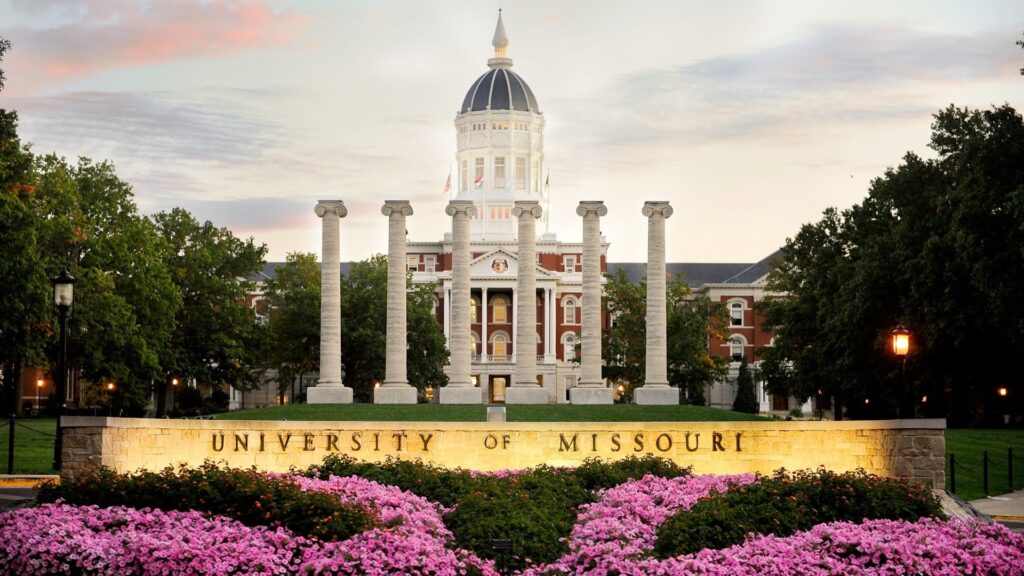
1. University of Missouri (Mizzou)
Widely recognized as the oldest formal journalism school in the world, the Missouri School of Journalism sets the gold standard for experiential learning. The program is famous for the “Missouri Method,” an educational philosophy that requires students to work in real, community-facing media outlets.
Instead of writing for a purely academic audience, Mizzou students produce content for an NBC-affiliated television station, an NPR-member radio station, and a daily city newspaper. Graduates enter the workforce with resumes that rival those of working professionals. College Factual notes that Mizzou doctoral and master’s graduates often see a significant earnings boost compared to typical journalism graduates nationwide.
2. Northwestern University (Medill)
The Medill School of Journalism, Media, Integrated Marketing Communications consistently ranks among the most prestigious media programs globally. Located just outside Chicago, Northwestern gives students access to the third-largest media market in the country.
Medill requires undergraduates to complete a “Journalism Residency.” This program places students in full-time, practical roles at media organizations across the country or internationally for a full quarter. Students work alongside seasoned veterans at outlets like The Washington Post, NPR, and various digital startups. The school’s Hall of Achievement features numerous Pulitzer Prize winners and prominent media executives, highlighting the immense value of a Medill degree.
3. Syracuse University (Newhouse)
The S.I. Newhouse School of Public Communications at Syracuse University dominates student media competitions. In the 2025 Broadcast Education Association (BEA) rankings, Syracuse secured the number three spot overall, taking first place in Interactive Multimedia and ranking highly in news and sports broadcasting.
Newhouse provides unparalleled resources, including cutting-edge broadcast studios and digital newsrooms. The program emphasizes versatility, teaching students how to write, shoot, edit, and code. Syracuse alumni populate major television networks, top public relations firms, and leading digital publications, making the “Newhouse Network” one of the most powerful tools available to graduating seniors.
4. University of Southern California (Annenberg)
Securing the number one spot on College Factual’s 2025 list for best journalism programs, the USC Annenberg School for Communication and Journalism offers exceptional opportunities in the heart of Los Angeles.
USC Annenberg boasts a state-of-the-art media center that fully integrates television, radio, and digital news production. Students collaborate across different platforms, mirroring the workflow of modern, converged newsrooms. The program’s location allows students to easily secure internships in entertainment journalism, sports media, and investigative reporting, often transitioning directly into full-time roles at major West Coast media conglomerates upon graduation.
5. Arizona State University (Cronkite)
The Walter Cronkite School of Journalism and Mass Communication at Arizona State University is a powerhouse in broadcast and digital media. The school secured the number two spot in the 2025 BEA overall rankings, specifically dominating the news and sports categories.
Located in downtown Phoenix, the Cronkite School requires all students to complete a professional program. This might involve producing a nightly newscast aired on Arizona PBS, conducting investigative reporting through the Howard Center, or running strategic public relations campaigns. The school focuses heavily on innovation, constantly updating its curriculum to include virtual reality storytelling, drone videography, and audience analytics.
6. University of Florida (College of Journalism and Communications)
Ranking fourth overall in the 2025 BEA standings, the University of Florida offers an incredibly robust media education. The College of Journalism and Communications (CJC) houses a massive Innovation News Center, which serves as the working newsroom for the university’s local PBS, NPR, and ESPN affiliates.
UF emphasizes data-driven storytelling and digital audience engagement. Students learn how to track content performance, optimize stories for search engines, and engage communities on social platforms. The university’s strong alumni network throughout the Southeast makes it a top choice for students looking to work in major Florida, Georgia, and Carolina media markets.
7. University of Oklahoma (Gaylord)
The Gaylord College of Journalism and Mass Communication at the University of Oklahoma claimed the number one overall spot in the 2025 BEA rankings. This massive achievement highlights the exceptional quality of student work produced at the university, particularly in film, video, and broadcast news.
Gaylord College operates highly successful student-run advertising and public relations agencies, alongside daily news broadcasts. The faculty consists of experienced professionals who mentor students closely, helping them refine their portfolios for national competitions. The program’s consistent success in the BEA rankings proves that Gaylord students graduate fully prepared to produce award-winning media content.
8. Boston University (College of Communication)
Boston University’s College of Communication (COM) claimed the number two spot in College Factual’s 2025 rankings. Situated in a vibrant college town and major media hub, BU offers students an incredibly dynamic environment for learning the craft of reporting.
BU places a heavy emphasis on narrative storytelling and investigative journalism. The faculty includes numerous Pulitzer Prize winners who teach students how to uncover complex stories, interview difficult subjects, and write compelling narratives. Students frequently intern at the Boston Globe, WBUR, and various documentary production companies located throughout the city.
9. University of Maryland, College Park (Merrill)
The Philip Merrill College of Journalism offers a distinct advantage due to its proximity to Washington, D.C. Ranking highly on the 2025 College Factual list, the University of Maryland is the premier destination for students interested in political reporting, public affairs, and investigative journalism.
Merrill operates the Capital News Service, where students cover state and national politics for professional media outlets. Students gain security clearances, attend press briefings, and report directly from Capitol Hill. This immersive experience ensures that Maryland graduates leave school with a deep understanding of government operations and political media.
10. University of Wisconsin-Madison (SJMC)
The School of Journalism and Mass Communication at the University of Wisconsin-Madison rounds out the top 10 list. Consistently ranked as a top-five program by College Factual for 2025, UW-Madison takes a highly analytical and research-based approach to media education.
The program encourages students to pursue double majors, allowing them to pair their media skills with expertise in political science, economics, or environmental studies. This dual focus produces reporters who can speak authoritatively on complex subjects. UW-Madison students operate several successful publications and benefit from a dedicated career services team that connects them with employers across the Midwest and beyond.
How to Choose the Right Program for You
Reading through rankings provides a helpful starting point, but the “best” school ultimately depends on your specific career goals. Consider several personal factors when finalizing your college application list.
Your preferred media format should dictate your choices. If you want to anchor a national sports broadcast, look closely at Syracuse or Arizona State due to their dominant broadcast facilities. If political reporting is your goal, the University of Maryland or Northwestern will put you in the right geographic regions to build political contacts early.
Financial considerations also play a massive role. Media salaries can be modest, especially in the first few years after graduation. Carefully evaluate the financial aid packages offered by each university. Public institutions like the University of Missouri or the University of Florida often provide exceptional value, especially for in-state students. Review the median starting salaries for graduates of each program to ensure your expected student loan debt aligns with your future earning potential.
Finally, visit the campuses if possible. Walk through the newsrooms, look at the broadcasting equipment, and talk to current students. Ask them about their internships and how accessible the professors are outside of class hours. A campus visit often provides the clarity needed to make your final decision.
Frequently Asked Questions
Do I need a master’s degree in journalism?
For most reporting jobs, a bachelor’s degree provides all the necessary training and credentials. News directors and editors prioritize your published portfolio and practical experience over advanced academic degrees. However, a master’s degree can be highly beneficial if you earned your undergraduate degree in a completely different field and want to transition into media, or if you want to teach at the university level later in your career.
Are journalism degrees still relevant?
Yes. The delivery methods of news continue to change, but the core skills remain in high demand. Organizations desperately need professionals who can gather accurate information, verify facts, analyze data, and communicate complex concepts clearly. A modern media degree teaches you how to produce videos, record podcasts, and manage digital communities, ensuring you remain highly employable in corporate communications, marketing, and traditional newsrooms.
How much do journalism graduates typically earn?
Starting salaries vary widely based on location, medium, and the specific role. According to data from College Factual, top programs like Syracuse and the University of Missouri report median starting salaries for their graduates hovering between $40,000 and $45,000. Graduates who move into digital marketing, corporate communications, or data analysis frequently see higher starting salaries than those entering local print or broadcast news.
Your Next Steps Toward a Media Career
Securing a spot at one of the top journalism schools in the US requires strong academic records and a demonstrated passion for storytelling. As you prepare your college applications, start building your portfolio now. Write for your high school newspaper, start a community blog, or launch a podcast. Admissions committees look for students who are already taking the initiative to create content.
Take the time to research each university’s specific application requirements, as some media programs require secondary applications or creative portfolios. By choosing a school that aligns with your passions and learning style, you position yourself for a successful, impactful career in the media industry.