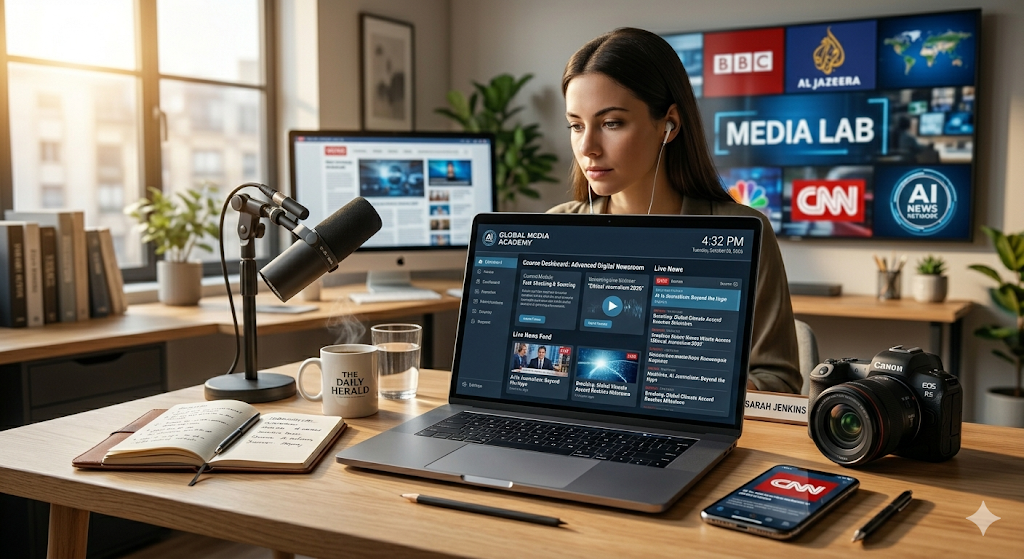
Journalism is evolving faster than ever in the digital era. With the rise of artificial intelligence, mobile reporting, social media journalism, podcasting, data journalism, and multimedia storytelling, aspiring journalists now need modern skills beyond traditional news reporting. This growing demand for updated media knowledge has made online journalism courses extremely popular worldwide.
Today, students, bloggers, reporters, content creators, media professionals, and aspiring news anchors are enrolling in online journalism certification programs to improve their skills, build strong portfolios, and increase career opportunities in digital media.
Online journalism courses offer flexible learning opportunities for:
- Students
- Working professionals
- Freelancers
- Content writers
- Digital creators
- Media enthusiasts
These courses help learners understand:
- News writing
- Reporting
- Investigative journalism
- Broadcast media
- Multimedia storytelling
- AI journalism tools
- Digital publishing
- Social media reporting
Many platforms now provide professional journalism certificates that improve resumes and enhance employability in modern media industries.
This detailed guide explores the top online journalism courses with certificates, their features, benefits, career opportunities, and how they can help you build a successful journalism career in 2026 and beyond.
Why Online Journalism Courses Are Popular
Online journalism courses are growing rapidly because the media industry itself has become highly digital.
Modern journalists now work across:
- Websites
- Social media
- Podcasts
- Video platforms
- Mobile applications
- AI-powered newsrooms
Traditional journalism education alone is often not enough to keep up with industry changes.
Online learning helps students:
- Learn from home
- Gain practical skills
- Earn certificates
- Build portfolios
- Stay updated with trends
Benefits of Online Journalism Courses
Flexible Learning
Students can learn:
- Anytime
- Anywhere
- At their own pace
This flexibility is especially useful for working professionals.
Affordable Education
Many online journalism courses are:
- Budget-friendly
- Free
- Low-cost compared to universities
This makes journalism education more accessible globally.
Industry-Relevant Skills
Online journalism courses focus heavily on practical digital skills such as:
- SEO writing
- Video editing
- Podcasting
- Mobile reporting
- AI tools
These skills are highly valuable in modern media jobs.
Certification Benefits
Certificates improve:
- Resume strength
- Job applications
- Freelance opportunities
- Professional credibility
Many employers appreciate industry-recognized certifications.
Best Platforms for Journalism Courses
Several platforms dominate online journalism education worldwide.
Popular platforms include:
- Coursera
- Udemy
- edX
- FutureLearn
- Skillshare
- LinkedIn Learning
These websites offer beginner and advanced journalism programs.
Best Online Journalism Courses With Certificates
Google Digital Journalism Courses
Google offers several digital media and journalism-related learning resources.
Popular topics include:
- Fact-checking
- Digital storytelling
- Data journalism
- Verification techniques
Google courses help journalists adapt to the digital news ecosystem.
Coursera Journalism Courses
Coursera is one of the most trusted platforms for professional journalism education.
Popular journalism courses include:
- News Writing
- Investigative Journalism
- Media Ethics
- Digital Storytelling
Many courses are created by top universities.
University Journalism Programs on Coursera
Leading universities offer certified journalism programs on Coursera.
Popular institutions include:
- Michigan State University
- University of Illinois
- University of London
These courses provide academic-quality journalism education online.
Udemy Journalism Courses
Udemy is popular because of its affordable pricing and practical learning approach.
Popular topics include:
- News reporting
- Broadcast journalism
- Journalism writing
- Podcasting
- Mobile journalism
Udemy frequently offers discounts, making courses highly affordable.
LinkedIn Learning Journalism Courses
LinkedIn provides professional journalism and media training programs.
Popular courses include:
- Video journalism
- Interviewing skills
- Media communication
- News presentation
Certificates can be added directly to LinkedIn profiles.
edX Journalism Courses
edX collaborates with universities worldwide.
Popular topics include:
- Media studies
- Journalism ethics
- Investigative reporting
- Digital communication
Many edX courses provide professional certification options.
Reuters Digital Journalism Course
Reuters is highly respected in journalism education.
Reuters offers training focused on:
- News verification
- Fact-checking
- Reporting accuracy
- Breaking news coverage
These courses are especially valuable for aspiring reporters.
BBC Academy Journalism Training
BBC Academy provides journalism training materials and educational resources.
Topics include:
- Journalism standards
- Broadcast reporting
- Interviewing
- Ethical journalism
BBC training emphasizes professional newsroom standards.
Data Journalism Courses
Data journalism has become one of the fastest-growing journalism fields.
Data journalism courses teach:
- Data visualization
- Spreadsheet analysis
- Infographics
- Storytelling through statistics
These skills are increasingly important in modern newsrooms.
Investigative Journalism Courses
Investigative journalism programs teach:
- Research methods
- Interview techniques
- Source verification
- Public records investigation
These courses are ideal for serious journalism careers.
Mobile Journalism (MOJO) Courses
Mobile journalism is now a major media trend.
MOJO courses teach:
- Smartphone reporting
- Mobile editing
- Live streaming
- Social media reporting
Modern journalists increasingly use smartphones for professional reporting.
Broadcast Journalism Courses
Broadcast journalism focuses on:
- TV reporting
- News anchoring
- Voice presentation
- Camera communication
These skills are useful for television and video journalism careers.
Multimedia Journalism Courses
Multimedia journalism combines:
- Writing
- Video
- Audio
- Photography
These courses prepare students for digital-first newsrooms.
Podcast Journalism Courses
Podcasting has become a major journalism trend.
Podcast journalism courses teach:
- Audio storytelling
- Podcast editing
- Interview recording
- Voice presentation
Podcast creators now reach millions globally.
AI Journalism Courses
Artificial intelligence is changing modern journalism rapidly.
AI journalism courses cover:
- AI writing tools
- Automated reporting
- Fact-checking systems
- Ethical AI journalism
Understanding AI is becoming essential for journalists.
Social Media Journalism Courses
Modern journalists must understand:
- TikTok reporting
- Instagram news storytelling
- YouTube journalism
- Social media verification
These courses help journalists adapt to digital audiences.
SEO Writing for Journalists
SEO skills are now essential in digital media.
SEO journalism courses teach:
- Keyword research
- Search optimization
- Headline writing
- Content structure
These skills help journalists increase article visibility online.
Fact-Checking Journalism Courses
Fake news has increased demand for fact-checking experts.
Courses teach:
- Verification methods
- Source analysis
- Deepfake detection
- News authentication
Fact-checking skills are highly valuable in modern media.
Photography Journalism Courses
Photojournalism remains an important journalism field.
Courses cover:
- News photography
- Camera settings
- Visual storytelling
- Editing techniques
Visual journalism strongly impacts audience engagement.
Video Journalism Courses
Video content dominates online media.
Video journalism courses teach:
- Editing
- Camera operation
- Scriptwriting
- Video storytelling
Modern audiences increasingly prefer video news content.
Best Free Journalism Courses Online
Many websites offer free journalism education.
Popular free platforms include:
- Alison
- FutureLearn
- Coursera free audit mode
- YouTube educational channels
Free courses are excellent for beginners.
Paid Journalism Certifications Worth Considering
Premium journalism programs often provide:
- Better structure
- Professional mentorship
- Industry projects
- Stronger certifications
Paid certificates may improve employability further.
Journalism Courses for Beginners
Beginner-friendly journalism courses focus on:
- News basics
- Reporting techniques
- Writing structure
- Interviewing
These are ideal for students entering media fields.
Advanced Journalism Courses
Advanced programs focus on:
- Investigative reporting
- Data journalism
- International reporting
- Media leadership
Experienced professionals benefit most from these courses.
Journalism Courses for Students
Students often choose online journalism programs because they:
- Improve resumes
- Build portfolios
- Enhance internships
Certification courses also help students explore media career paths.
Journalism Courses for Freelancers
Freelance journalists need:
- Digital publishing skills
- SEO knowledge
- Multimedia capabilities
Online courses help freelancers compete in modern media markets.
Career Opportunities After Journalism Courses
Certified journalism skills can lead to careers such as:
- News reporter
- Content writer
- News anchor
- Podcast host
- Media analyst
- Investigative journalist
- Video journalist
- Digital editor
The media industry continues creating new digital roles.
Skills You Learn in Journalism Courses
Most journalism programs teach:
- Storytelling
- Research
- Communication
- Editing
- Ethics
- Interviewing
Advanced courses also cover:
- AI tools
- SEO
- Video production
- Data analysis
Importance of Journalism Certifications
Certificates demonstrate:
- Professional dedication
- Updated skills
- Industry readiness
They can strengthen:
- Job applications
- Freelance profiles
- LinkedIn visibility
Journalism Industry Trends in 2026
Current journalism trends include:
- AI-assisted reporting
- Mobile journalism
- Creator-led news brands
- Independent journalism
- Short-form video reporting
Online journalism education now reflects these trends.
How to Choose the Best Journalism Course
When selecting a course, consider:
- Course reviews
- Certification quality
- Instructor experience
- Skill focus
- Career goals
Choose programs aligned with your interests.
Common Mistakes When Choosing Journalism Courses
Ignoring Course Practicality
Theory alone is not enough.
Practical projects matter.
Choosing Outdated Courses
Modern journalism evolves rapidly.
Always select updated programs.
Ignoring Portfolio Development
Strong portfolios are essential for journalism careers.
Focusing Only on Certificates
Skills matter more than certificates alone.
Practical learning is crucial.
Future of Online Journalism Education
Future journalism education may include:
- AI-powered learning
- Virtual reality reporting simulations
- Interactive newsroom training
- Real-time digital publishing labs
Technology will continue transforming journalism learning.
Why Journalism Skills Matter More Than Ever
In today’s information-driven world, journalism skills help society by:
- Promoting truth
- Fighting misinformation
- Supporting democracy
- Educating audiences
Skilled journalists remain essential globally.
Final Thoughts
Online journalism courses with certificates have become one of the best ways to develop modern media skills in 2026. From digital storytelling and investigative reporting to AI journalism and social media news production, these programs help aspiring journalists adapt to the rapidly changing media landscape.
Whether you are a student, freelancer, blogger, aspiring reporter, or experienced media professional, online journalism certifications can improve your skills, strengthen your resume, and open new career opportunities. Platforms like Coursera, Udemy, edX, Reuters, BBC Academy, and LinkedIn Learning continue providing accessible, flexible, and industry-relevant journalism education for learners worldwide.
As journalism continues evolving alongside technology, professionals who invest in continuous learning and digital skills will remain highly competitive in the future media industry.