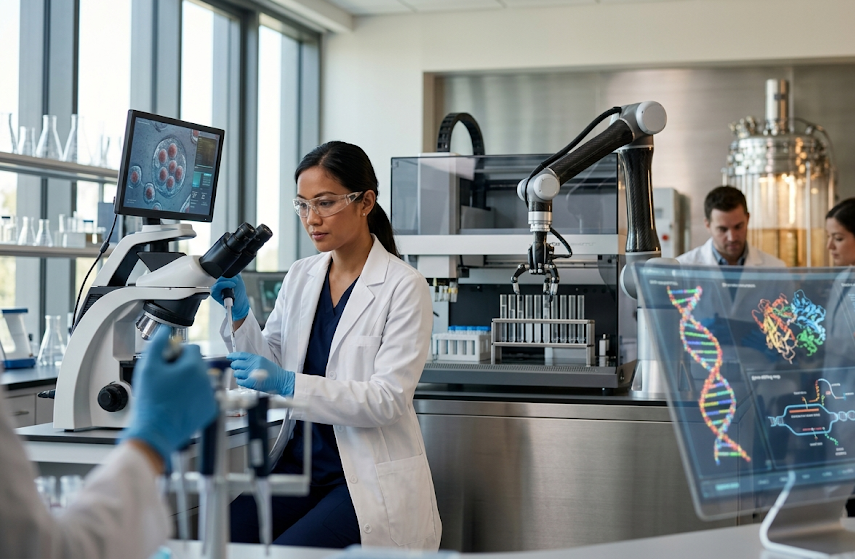
Biotechnology has become one of the most influential fields of science in the 21st century, driving innovations that are transforming healthcare, agriculture, environmental sustainability, food production, and industrial manufacturing. By combining biology with advanced technologies such as artificial intelligence (AI), genetic engineering, robotics, and data science, biotechnology is solving some of humanity’s most pressing challenges. In 2026, the pace of innovation has accelerated, with groundbreaking discoveries opening new possibilities for disease treatment, personalized medicine, sustainable farming, and climate resilience.
The biotechnology industry is no longer limited to research laboratories. Today, biotech companies collaborate with hospitals, pharmaceutical manufacturers, agricultural businesses, universities, and technology firms to develop solutions that improve lives and strengthen global economies. Gene-editing technologies, mRNA-based medicines, synthetic biology, lab-grown food, AI-assisted drug discovery, and regenerative medicine are among the most exciting developments shaping the future.
Governments and private investors are also increasing funding for biotechnology research, recognizing its potential to address public health crises, food security, and environmental sustainability. As a result, biotechnology is emerging as one of the fastest-growing industries worldwide.
What Is Biotechnology?
Biotechnology is the application of biological systems, living organisms, or biological processes to develop products and technologies that improve human life and the environment.
It combines multiple scientific disciplines, including:
- Biology
- Genetics
- Chemistry
- Microbiology
- Bioinformatics
- Artificial Intelligence
- Data Science
- Engineering
Biotechnology is widely used across several industries, including healthcare, agriculture, pharmaceuticals, food production, environmental conservation, and industrial manufacturing.
Why Biotechnology Is Growing Rapidly
Several factors are driving the rapid expansion of biotechnology in 2026.
Artificial Intelligence
AI accelerates scientific research by analyzing massive biological datasets, predicting protein structures, identifying drug candidates, and improving laboratory automation.
Advances in Genetic Engineering
Modern gene-editing technologies enable scientists to study and modify DNA with greater precision than ever before.
Rising Healthcare Demand
An aging global population and increasing chronic diseases have created demand for innovative therapies and personalized treatments.
Climate Change
Biotechnology supports sustainable agriculture, carbon reduction, and environmentally friendly manufacturing.
Increased Investment
Governments, venture capital firms, and pharmaceutical companies continue investing billions of dollars into biotechnology research and development.
AI-Powered Drug Discovery
One of the biggest breakthroughs in biotechnology is the integration of artificial intelligence into drug development.
Traditionally, discovering new medicines required many years of laboratory research.
AI now helps researchers:
- Analyze biological data
- Identify promising compounds
- Predict treatment effectiveness
- Reduce research costs
- Accelerate clinical development
This allows scientists to bring new therapies to patients more efficiently.
Personalized Medicine
Healthcare is moving toward individualized treatment rather than one-size-fits-all approaches.
Personalized medicine uses:
- Genetic information
- Medical history
- Lifestyle data
- Biomarkers
to design treatments tailored to each patient.
Benefits include:
- Better treatment outcomes
- Reduced side effects
- Earlier disease detection
- More accurate diagnoses
Gene Editing Technologies
Gene editing remains one of biotechnology’s most transformative innovations.
Scientists are developing increasingly precise methods to study and modify genetic material for research and potential therapies.
Current areas of research include:
- Rare genetic disorders
- Cancer research
- Inherited diseases
- Agricultural improvements
- Disease-resistant crops
While promising, these technologies continue to be carefully evaluated for safety and ethical considerations.
Regenerative Medicine
Regenerative medicine focuses on repairing or replacing damaged tissues and organs.
Researchers are advancing:
- Stem cell therapies
- Tissue engineering
- Organ regeneration
- Wound healing technologies
Future treatments may reduce the need for organ transplants and improve recovery from serious injuries.
mRNA Technology Beyond Vaccines
Messenger RNA (mRNA) technology gained global attention during the COVID-19 pandemic.
In 2026, researchers are expanding its potential applications to include:
- Cancer therapies
- Rare disease treatments
- Personalized vaccines
- Infectious disease prevention
The flexibility of mRNA technology makes it one of biotechnology’s most promising research areas.
Synthetic Biology
Synthetic biology combines biology and engineering to design biological systems for useful purposes.
Applications include:
- Sustainable manufacturing
- Bio-based chemicals
- Eco-friendly materials
- Renewable fuels
- Industrial enzymes
Scientists engineer microorganisms to produce valuable products with lower environmental impact.
Biotechnology in Agriculture
Agriculture is benefiting significantly from biotechnology innovations.
Climate-Resilient Crops
Scientists are developing crops that better tolerate:
- Drought
- Heat
- Salinity
- Flooding
These improvements support food security under changing climate conditions.
Disease Resistance
Biotechnology helps create crops that are more resistant to pests and plant diseases, reducing dependence on chemical pesticides.
Improved Nutrition
Researchers are enhancing the nutritional value of staple crops to address vitamin and mineral deficiencies in vulnerable populations.
Precision Agriculture
Modern farming increasingly relies on biotechnology combined with digital technologies.
Farmers use:
- AI analytics
- Satellite imagery
- Soil sensors
- Drones
- Genomic data
These tools improve productivity while reducing environmental impact.
Lab-Grown Food
Cultivated meat and other alternative proteins continue advancing.
Benefits may include:
- Reduced land use
- Lower greenhouse gas emissions
- Improved animal welfare
- Increased food security
Although commercialization continues to expand, production costs remain an important consideration.
Biotechnology and Environmental Sustainability
Biotechnology contributes to environmental protection through innovative solutions.
Bioremediation
Microorganisms help remove pollutants from:
- Soil
- Water
- Industrial waste
This supports environmental restoration.
Biofuels
Researchers continue improving renewable fuels produced from biological materials.
Biofuels may reduce dependence on fossil fuels while lowering emissions.
Biodegradable Materials
Biotechnology enables production of environmentally friendly plastics and packaging materials that decompose more naturally than conventional plastics.
Microbiome Research
Scientists continue discovering how microorganisms living inside the human body influence health.
Microbiome research may improve understanding of:
- Digestion
- Immunity
- Mental health
- Metabolism
- Chronic diseases
Future therapies may target beneficial bacteria to improve health outcomes.
Cancer Research Innovations
Biotechnology continues transforming cancer research.
Emerging approaches include:
- Precision medicine
- Immunotherapy
- Genetic analysis
- AI-assisted diagnostics
- Targeted drug development
Researchers aim to improve treatment effectiveness while reducing harmful side effects.
Digital Biotechnology
Biotechnology increasingly relies on digital technologies.
Researchers use:
- Cloud computing
- Artificial intelligence
- Machine learning
- Bioinformatics
- High-performance computing
These tools enable faster analysis of massive biological datasets.
Robotics in Biotechnology
Laboratory automation is improving research efficiency.
Robotic systems assist with:
- Sample preparation
- Laboratory testing
- Drug screening
- DNA sequencing
- Quality control
Automation reduces human error while increasing productivity.
Biotechnology in Public Health
Biotechnology strengthens healthcare systems through:
- Faster diagnostics
- Disease surveillance
- Vaccine development
- Genomic monitoring
- Personalized healthcare
Rapid detection technologies improve responses to emerging health threats.
Industrial Biotechnology
Industries increasingly replace traditional manufacturing with biotechnology-based production.
Applications include:
- Bio-based chemicals
- Textile production
- Food ingredients
- Cosmetics
- Cleaning products
Biological manufacturing often requires less energy and produces fewer emissions.
Ethical Considerations
Rapid biotechnology advances raise important ethical questions.
Key concerns include:
- Genetic privacy
- Data protection
- Responsible gene editing
- Accessibility of advanced therapies
- Environmental safety
Strong ethical oversight supports responsible scientific progress.
Biotechnology Careers
The expanding biotechnology sector creates growing career opportunities.
Popular professions include:
- Molecular biologist
- Genetic engineer
- Bioinformatician
- Clinical researcher
- Bioprocess engineer
- Pharmaceutical scientist
- Agricultural biotechnologist
- Regulatory specialist
- Biomedical engineer
- Laboratory technician
Demand for skilled professionals continues increasing worldwide.
Skills Needed in Biotechnology
Students interested in biotechnology should develop expertise in:
- Biology
- Genetics
- Chemistry
- Data analysis
- Artificial intelligence
- Programming
- Laboratory techniques
- Scientific communication
Interdisciplinary knowledge has become increasingly valuable.
Challenges Facing Biotechnology
Despite remarkable progress, biotechnology faces several challenges.
Research Costs
Developing new therapies requires substantial investment.
Clinical research often takes many years before products reach patients.
Regulatory Approval
New treatments undergo extensive safety evaluations before public use.
Strong regulations protect patients while ensuring product quality.
Public Understanding
Complex scientific topics sometimes lead to misinformation.
Clear science communication helps improve public awareness.
Global Accessibility
Ensuring equitable access to advanced biotechnology remains an important global objective.
Future Trends in Biotechnology
Several innovations are expected to shape biotechnology over the coming decade.
AI-Driven Research
Artificial intelligence will continue accelerating biological discovery and personalized healthcare.
Advanced Gene Therapies
Researchers aim to develop safer and more precise genetic treatments.
Sustainable Manufacturing
Bio-based production methods may replace traditional industrial processes.
Precision Nutrition
Future dietary recommendations may become increasingly personalized using genetic and metabolic information.
Organ Engineering
Scientists continue advancing tissue engineering and laboratory-grown organs for transplantation research.
Biotechnology and Global Challenges
Biotechnology contributes solutions to many worldwide issues, including:
- Food security
- Climate change
- Public health
- Clean energy
- Environmental conservation
- Aging populations
Its applications extend far beyond healthcare.
The Future of Biotechnology
Biotechnology is expected to become even more integrated with artificial intelligence, robotics, and digital health technologies.
Future innovations may include:
- Smart diagnostics
- Personalized treatments
- Sustainable agriculture
- Climate-resilient food systems
- Bio-based manufacturing
- Advanced regenerative medicine
As scientific understanding grows, biotechnology will continue shaping medicine, industry, agriculture, and environmental sustainability.
Conclusion
Biotechnology breakthroughs in 2026 are transforming nearly every aspect of modern life, from healthcare and agriculture to environmental protection and industrial manufacturing. Advances in artificial intelligence, personalized medicine, gene editing, regenerative therapies, synthetic biology, laboratory automation, and sustainable biotechnology are enabling researchers to solve complex problems that once seemed impossible.
These innovations are improving disease diagnosis, accelerating drug discovery, supporting food security, reducing environmental impact, and creating new economic opportunities across the globe. At the same time, continued investment in research, ethical governance, and international collaboration will be essential to ensure that biotechnology develops responsibly and benefits society as a whole.
As technology continues to evolve, biotechnology will remain one of the most influential scientific fields of the coming decades. By combining biological knowledge with digital innovation, it offers powerful solutions to some of humanity’s greatest challenges while opening new possibilities for healthier lives, sustainable development, and scientific progress.